
Retracted Orthopaedic Research Publications. Where do we stand: A Review
Article Information
Prof Mir Sadat-Ali MBBS, MS, FRCS, PhD, D Orth*
Dallah Hospital Al-Khobar, King Faisal Ibn Abd Al Aziz, Al Rakah Al Janubiyah, Al Khobar, Saudi Arabia
*Corresponding Author: Prof Mir Sadat-Ali, Dallah Hospital Al-Khobar, King Faisal Ibn Abd Al Aziz Road, Al Rakah Al Janubiyah, Al Khobar, Saudi Arabia.
Received: 17 January 2026; Accepted: 23 January 2026; Published: 30 January 2026
Citation: Mir Sadat-Ali, Retracted Orthopaedic Research Publications. Where do we stand: A Review. Journal of Orthopedics and Sports Medicine. 8 (2026): 29-32.
View / Download Pdf Share at FacebookAbstract
Retraction of published articles is universal and is ever-increasing. There is limited data on retracted articles in orthopaedics, both in general and in Saudi Arabia in particular. The objective of the study was to evaluate the orthopaedic retracted articles in the literature with special emphasis on Saudi Arabia.
Four databases, Scopus, www.pubmed.gov, Web of Science and the website Retraction Watch (www.retractionwatch.com), were searched with the keywords of “orthopaedic”; “bone and joint, “musculoskeletal disease “, sports medicine” , Saudi Arabia, retractions in orthopaedic research for the period of 1989 to 2025 were performed.
Between 1989 and 2025, 1246 publications have been retracted. Overall, 1246 publications were cited by 14,870 researchers who were misled by these publications, endangering patients' lives and, on the basis of the research, decisions might have been taken in patient care. Over the years the number of retracted publications have increased reaching its peak in 2022 (21.8%) From Saudi Arabia 22 (1.76%) publications were retracted and 57 institutions were co-authoring these publications.
The field of orthopaedics is not immune to publications based on fraudulent data, inappropriate authorship claims, and general misconduct related to professional codes of ethics which appears to be increasing. We believe that universities should take cognizance of researchers who are rampantly publishing articles which are retracted due to any reason and they should be reprimanded as this will cause bedlam in clinical practice and end up in patient harm.
Keywords
Retracted publications; Orthopaedic; Paper Mills; Fraud
Article Details
1. Introduction
A retracted article is one that a journal's editorial board has withdrawn because, in their judgment, the article was found to be unreliable, flawed, or fraudulent, and the results cannot be believed. Retraction of research articles are not new but it appears it is on the rise. A recent report indicated that two years ago more than 10,000 research papers were retracted that year which was the highest reported since retractions began in 1756 [1]. Studies has shown that retractions over the years are on the rise and in 2022 reached up to 7.5 per thousand publications [2,3] and annual retraction for the year 2022 was 0.2% [4]. It was highlighted that the retractions per 10,000 top four countries are Saudi Arabia (30.6), Pakistan (28.1), Russian Federation (24.9) and People’s Republic of China (23.5) [1,4]. In general retractions of publications in the medical field are low when compared to other fields of science but in some countries the incidence of retractions in medical field has risen. This rise is attributed not only to delinquency from new misconduct but also from journals scrutinizing better at finding and removing fraudulant research.[5-7] The issue of retractions is widespread across all the scientific fields, and Medicine and its faculties are not alone. Immunology, neurology, oncology, toxicology, and gastroenterology are at the top of the list [8,9].
Orthopaedic surgery is not immune to such indiscretions, and the retractions in this field are also increasing. In a report of 2017 the orthopaedic retractions were 1.4% of all retracted publications [3]. Yan et al. [10] reported that retractions in the orthopaedic literature is on the rise like other subspecialties and the reason is due to fraud and wrongdoing [11]. Even though Saudi Arabia stands at number 3 in the world for retracted publications and retractions in general publications, but an extensive review of the literature did not reveal any report on the subject of retractions of orthopaedic research publications, with special emphasis of retractions of orthopaedic publications from Saudi Arabia, hence this study was carried out to find the incidence, reasons for retractions and recommendations will be made to reduce this practice.
2. Methods
Four databases, Web of Science, Scopus, www.pubmed.gov, and the website Retraction Watch (www.retractionwatch.com), were searched with the keywords of “orthopaedic”; “bone and joint, “musculoskeletal disease “, sports medicine” , Saudi Arabia, retractions in orthopaedic research for the period of 1989 to 2025 were performed. The data extracted included the names of the authors, the title of the publication, the Journal, the year of retraction, and the co-authors and their countries. The number of citations of each retracted publication was also tabulated by searching the databases. Every publication retracted was checked twice to avoid any incorrect reporting. The inclusion criteria were all articles, whether principal or coauthors, published in Saudi Arabia were included. www.EndNote.com was used to identify duplicate publications and delete them. Two reviewers independently screened the retrieved data and then jointly compared the results. There were no disagreements among the reviewers regarding the final inclusion in the analysis. The PRISMA (Preferred Reporting Items for Systematic Reviews and Meta-Analyses) flowchart was used to analyze the retrieved articles (Figure 1) [12].
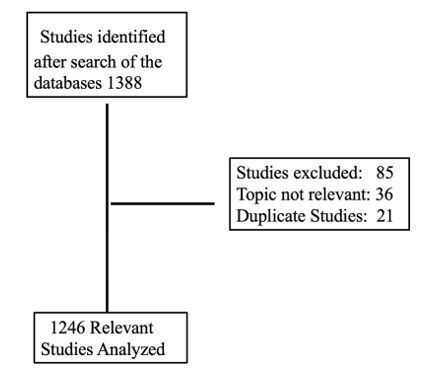
Figure 1: PRISMA flowchart showing the search and analysis.
3. Results
Between 1989 and 2025, 1246 publications have been retracted. Figure 2 lists the countries involved in these fraudulent publications, and Saudi Arabia ranks 10th. Over the years, the number of retracted publications has increased, reaching its peak in 2022 (21.8%) (Figure 3). Overall, 1246 publications were cited by 14,870 researchers who were misled by these publications, endangering patients' lives and, on the basis of the research, decisions might have been taken in patient care. (Figure 4) There were 463 journals that retracted the articles, and the top 15 are given in Figure 5. Only 57 (12.3%) journals were solely orthopaedic journals, and the other 87.6% were in other related disciplines. From Saudi Arabia, 22 publications were retracted, and 57 institutions were co-authoring these publications. (Figure 6). Ten Saudi Arabian orthopaedic retractions were from the top two publishers Springer Nature and Elsevier (Figure 7).
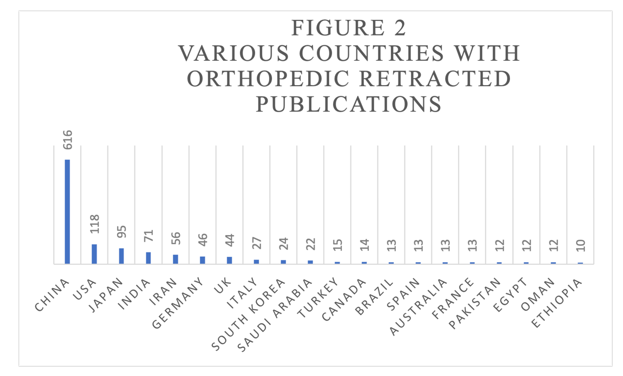
Figure 2: Various countries with orthopaedic retracted publications.
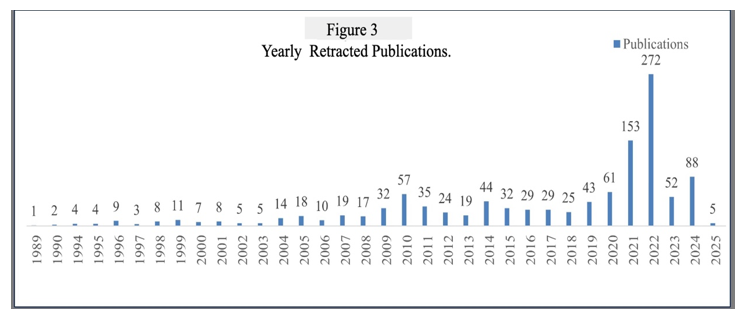
Figure 3: Yearly retracted publications.
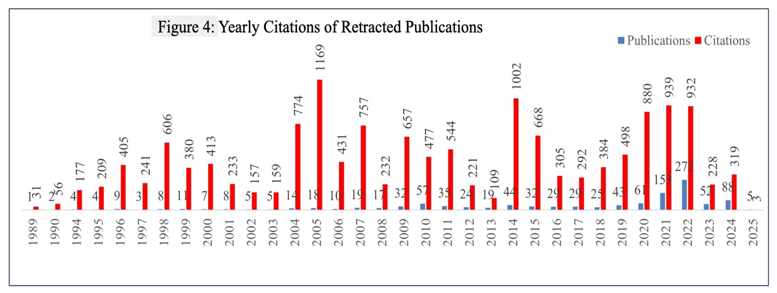
Figure 4: Yearly citations of retracted publications.
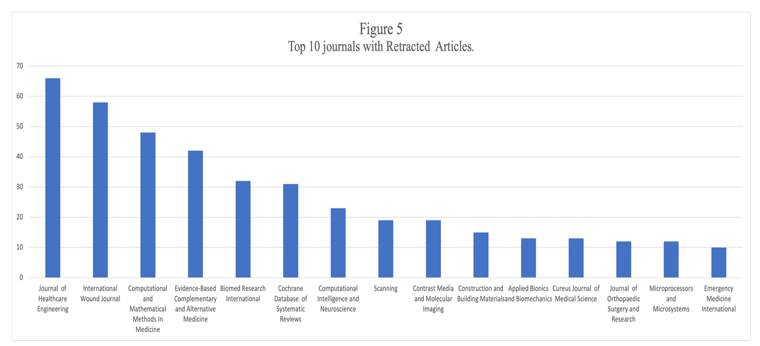
Figure 5: Top 10 journals which retracted articles.
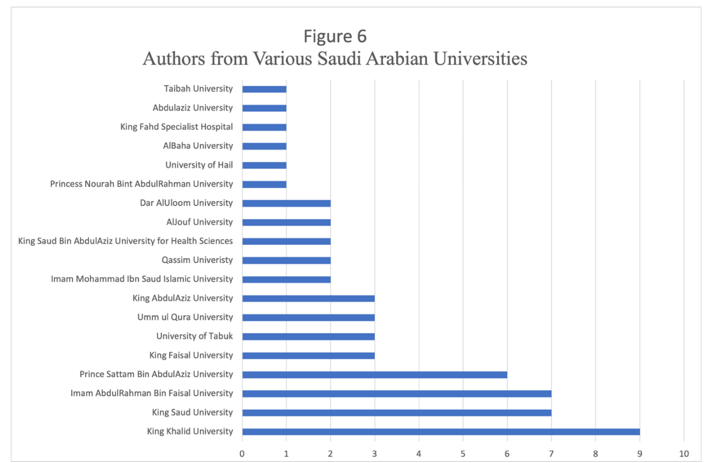
Figure 6: Authors from various Saudi Arabian Universities.
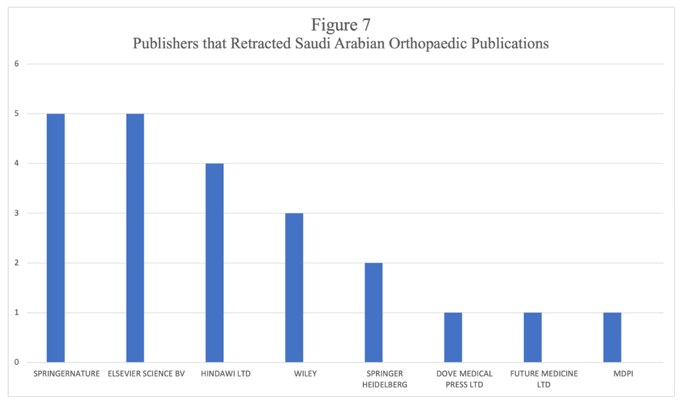
Figure 7: Publishers which retracted Saudi Arabian Orthopaedic Publications.
4. Discussion
Our study accentuates two issues; one, the increasing trend of fabricated publications in general, and orthopaedics is part of it, and secondly, orthopaedic surgeons in the country are to be blamed as well for such an unacceptable practice. There are a few reports in the literature on orthopaedic retractions, and the reasons for all the retractions appear quite similar. One of the recent articles in December 2025, which is not included in this analysis, has compared autologous platelet-rich plasma versus corticosteroid for the treatment of symptomatic partial rotator cuff tears, and this was withdrawn due to manipulated results [13]. If such an article were allowed, and other practicing orthopaedic surgeons took a cue from their result, it may lead to patient harm.
It appears that due to the awareness and strong action of journals and publishing companies, the overall incidence of retractions is decreasing, but for 2025, retractions may not appear soon; sometimes they take more than two years for the retraction information [14]. This may not be unusual to find the first retraction of 2026 in December 2025 [15]. Our review also finds that China, the US, Japan, and India are the top 4 countries from where the retractions were noticed and account for over 70% of the total number of retractions. In this review, we found that most of the publications from Saudi Arabia that were retracted came from non-orthopaedic journals in which orthopaedic-related subjects were published.
Retractions are done for various reasons and investigated for retraction done by the editors, publishers, and a third party. In general, misconduct was the most common reason for reported retractions in 45.9%. But in orthopaedic journals, fraud and misconduct were reported in about 31% of the retractions [16]. In the retractions from Saudi Arabian orthopaedic publications, 50% were retracted due to academic /scientific data manipulation, multiple reasons, 22.7% academic /scientific fraud, forged authorship, 13.6% and duplicate publications, 9%.
Why do researchers fabricate and cheat about their work, and who should be blamed ?. This is a very complex question that needs to be resolved soon. Authors are putting their names, institutions, and the country’s name on the line. There is enormous pressure to follow the culture of “Publish or Perish” imposed by the institutions, personal ambition, career advancement, promotions to higher faculty positions, incentives put in by the institutions, and the desire for personal glory. These factors cause some researchers to overlook personal ethics and override principles and honesty, resulting in actions that compromise integrity. It's important that administrators of institutions establish functioning monitoring offices within their systems, ease pressure on researchers, and instill the ethics of scientific integrity through repeated dialogues, so that misconduct and fabrication can be rooted out. Moreover, repeat offenders should not be let away easily, as history tells us scientists in the United States of America and United Kingdom have been punished, jailed, and barred from medical practice [17-19].
Our review has some limitations in that retractions may have been missed because of the search and the keywords, and secondly, articles published that are not indexed were not under our review. Every attempt was made to report the institutions involved accurately and without bias. The strength of this study is that it will make everyone, from researchers to administrators, aware of the extent of retractions in a given country, and they need to find ways to put an end to this practice.
5. Conclusion
The field of orthopaedics is not immune to publications due to fraud and fabrication, which appears to be increasing. In this study, we have described articles in general and specifically from Saudi Arabia and attempted to report the reasons for such publications.
Recommendations: We believe that universities should take cognizance of researchers who are rampantly publishing fraudulent and fabricated data, and they should be reprimanded, otherwise this will cause bedlam in clinical practice and end up in patient harm. Moreover, universities should not overlook this conduct to raise their global rankings.
Acknowledgment: The author thank Mr Mohammed Ajmal Khan, Library, Imam AbdulRahman bin Faisal University who was the second reviewer of the data.
Conflict of Interest: None to declare.
Financial support and sponsorship: This study did not receive any specific grant from funding agencies in the public, commercial, or not-for-profit sectors.
References
- Van Noorden R. More than 10,000 research papers were retracted in 2023 – a new record. Nature 624 (2023): 479-481.
- Lou Y, Zhou Z, Shen Z, et al. Prevalence of problematic papers in non-coding RNA research. bioRxiv (2024): 607530-607530.
- Rai R, Sabharwal S. Retracted publications in orthopaedics: prevalence, characteristics, and trends. J Bone Joint Surg Am 99 (2017): e44-e44.
- Freijedo-Farinas F, Ruano-Ravina A, Pérez-Ríos M, et al. Biomedical retractions due to misconduct in Europe: characterization and trends in the last 20 years. Scientometrics 129 (2024): 2867-2882.
- Steen RG. Retractions in the scientific literature: is the incidence of research fraud increasing? J Med Ethics 37 (2011): 249-253.
- Cokol M, Ozbay F, Rodriguez-Esteban R. Retraction rates are on the rise. EMBO Rep 9 (2008): 2-2.
- Gaudino M, Robinson NB, Audisio K, et al. Trends and characteristics of retracted articles in the biomedical literature, 1971 to 2020. JAMA Intern Med 181 (2021): 1118-1121.
- Ioannidis JPA, Pezzullo AM, Cristiano A, et al. Linking citation and retraction data reveals the demographics of scientific retractions among highly cited authors. PLoS Biol 23 (2025): e3002999-e3002999.
- Kocyigit BF, Akyol A, Zhaksylyk A, et al. Analysis of retracted publications in medical literature due to ethical violations. J Korean Med Sci 38 (2023): e324-e324.
- Yan J, MacDonald A, Baisi L, et al. Retractions in orthopaedic research: a systematic review. Bone Joint Res 5 (2016): 263-268.
- Levett JJ, Elkaim LM, Alotaibi NM, et al. Publication retraction in spine surgery: a systematic review. Eur Spine J 32 (2023): 3704-3712.
- Moher D, Liberati A, Tetzlaff J, et al. Preferred reporting items for systematic reviews and meta-analyses: the PRISMA statement. PLoS Med 6 (2009): e1000097-e1000097.
- Shams A, El-Sayed M, Gamal O, et al. Retraction note: subacromial injection of autologous platelet-rich plasma versus corticosteroid for the treatment of symptomatic partial rotator cuff tears. Eur J Orthop Surg Traumatol 36 (2025): 36-36.
- Call CM, Michalakes PC, Lachance AD, et al. A systematic review of retracted publications in clinical orthopaedic research. J Arthroplasty 39 (2024): 3107-3113.
- Yang L, Shu T, Liang Y, et al. [Retracted] GDC 0152 attenuates the malignant progression of osteosarcoma promoted by ANGPTL2 via PI3K/AKT but not p38MAPK signaling pathway. Int J Oncol 68 (2026): 14-14.
- Kincaid E. Hindawi shuttering four journals overrun by paper mills: Retraction Watch. Retraction Watch (2023): 1-1.
- General Medical Council. Fitness to practise panel hearing: Andrew Wakefield, determination of serious professional misconduct. General Medical Council (2010): 1-1.
- https://www.bbc.com/news/uk-scotland-edinburgh- Assessed December 2025.
- https://www.universityworldnews.com/post.php. Assessed December 2025.