
Perception of Telephone-Assisted Cardiopulmonary Resuscitation Among Emergency Medical Personnel in China: A Web-Based Survey
Article Information
Xuqin Kang, Jing Lou, Sijia Tian, Shengmei Niu, Luxi Zhang, Huixin Lian, Jinjun Zhang*
Beijing Emergency Medical Centre, Beijing, China
* Corresponding author: Jinjun Zhang, Beijing Emergency Medical Centre, Qianmen Xidajie, Beijing, PR, China
Received: 27 December 2021; Accepted: 12 January 2022; Published: 14 January 2022
Citation: Xuqin Kang, Jing Lou, Sijia Tian, Shengmei Niu, Luxi Zhang, Huixin Lian, Jinjun Zhang. Perception of Telephone-Assisted Cardiopulmonary Resuscitation Among Emergency Medical Personnel in China: A Web-Based Survey. Cardiology and Cardiovascular Medicine 6 (2022): 1s-14s.
View / Download Pdf Share at FacebookAbstract
Objectives: To investigate the perception on Telephone-Assisted Cardiopulmonary Resuscitation (T-CPR) after Out-Of-Hospital Cardiac Arrest (OHCA) among Emergency Medical Service (EMS) providers in China.
Methods: A multicentre, cross-sectional, descriptive, online questionnaire survey study was conducted on the perception among emergency centres in various regions across China from December 2018 to June 2019. Answers to questions concerning baseline characteristics of survey respondents, cognition and implementation of T-CPR, and use of automated external defibrillators were surveyed.
Results: Of 1,191 questionnaires obtained from 15 provinces in China, 1,187 were valid. Among the 1,187 respondents, the mean age was 32.1±7.2 (20–60)years; 436 (36.7%) were male and 751 (63.3%)female; there were 256 dispatchers, 494 emergency doctors, 400 emergency nurses, and 37 medical emergency assistants; 960 (80.9%) had previously learned T-CPR and 227 (19.1%) had not. Of the 960 participants who knew T-CPR, 796 (82.9%) recognised cardiac arrest (CA), 714 of whom (89.7%) would further implement T-CPR. The difference in the cognition rate of T-CPR was statistically significant among EMS providers from 54.1% to 91.0% (chi-square test, 38.1; P<.001). In multivariate analysis, dispatchers had a significantly improved knowledge of T-CPR as their workload increased (P<.001; OR=1.002; 95%CI, 1.001–1.003).
Conclusion: Substantial and important differences in the perception and implementation of T-CPR among EMS personnel were observed throughout China. Further professional training in T-CPR is urgently required for improvement in outcomes of OHCA countrywide.
Keywords
Cognition; Cardiac arrest; Cardiopulmonary resuscitation; Dispatch-assisted CPR; Out-of-hospital cardiac arrest; OHCA; Survey; T-CPR
Cognition articles; Cardiac arrest articles; Cardiopulmonary resuscitation articles; Dispatch-assisted CPR articles; Out-of-hospital cardiac arrest articles; OHCA articles; Survey articles; T-CPR articles
Article Details
1. Background
Out-of-Hospital Cardiac Arrest (OHCA) is a leading cause of mortality worldwide, although the incidence and mortality of OHCA treated by Emergency Medical Services (EMS) is uncertain, with variations influencing the exact nature of the global burden [1]. Every year more than 350,000 people fall victim to sudden, unexplained OHCA in the United States, and reports from 35 communities suggested an incidence of 55 per 100,000 person-years. Unfortunately, only about 10% of victims survived this dramatic event [2]. In Europe, it is estimated that 275,000 people have all-rhythm OHCA, with incidence of about 37.2/100,000 and only 10.55% surviving to hospital discharge [3]. OHCA affects 110,000 individuals in Japan annually [4] with a survival rate of 7.6%. In China, the incidence is 48.1/100,000, [5] i.e. 583,000 victims in a total population of 1.4 billion, while the survival rate in Beijing is a dismal 1.3% [6].
OHCA is a time-critical disease, and early Cardiopulmonary Resuscitation (CPR) is associated with a favourable prognosis. The emergency medical dispatcher is an essential link in the chain of survival [7], and many countries have implemented telephone-assisted CPR (T-CPR) and related training programmes. T-CPR is an effective means for the first witness to perform CPR in timely fashion, which not only improves the CPR ratio of the first witnesses
[8] but can also improve the effectiveness of CPR and improve the prognosis [9,10]. The European Resuscitation Council Guidelines for Resuscitation 2010 first indicated that a protocol for suspected CA should be devised for dispatchers [11]. In 2015, the International Guide issued by the American Heart Association emphasised the importance of T-CPR
[12] under the moniker “dispatch-assisted CPR”, which involves dispatchers providing CPR instruction to callers or bystanders by telephone [13]. Because little is known about T-CPR in China, we investigated the cognition of T-CPR among EMS staff by means of an online questionnaire survey [14] conducted among the different levels of emergency centres in China from December 2018 to June 2019.
2. Methods
China has an area of ≈9,600,000 km2 and its population in 2019 was ≈1,395 million, covering 34 provincial administrative units. The free emergency number 120 is used to call for an ambulance in most areas of China. Emergency services are provided 24 hours every day. An ambulance is dispatched from the nearest emergency station when called. EMS systems are single-tiered and government-funded- some are independent emergency stations, some are hospital-based stations, and others are mixed. At least one emergency driver and one emergency doctor are deployed in an ambulance, with an accompanying nurse and/or first-aid assistant in some areas.
2.1. Study Design and Population
The survey respondents were EMS staff including emergency doctors, emergency nurses, emergency dispatchers and first-aid assistants from 15 provinces, representative across China. To be eligible for inclusion in the study, each EMS system had to be an independently operated EMS unit, meaning the unit must have its own dispatch system.
After three rounds of expert consultation of the questionnaire, we presented it from site registration forms and an electronic Internet-based survey of all participating EMS systems in the study. A standardised survey form was constructed online (wjx.cn), delivered by the WeChat App and filled out via android/iOS smartphone or the website. Respondents to the survey were eligible if specified as EMS providers in the 15 provinces. The questionnaire mainly consists of two parts: the recognition and implementation of T-CPR among respondents.
2.2. Survey Content and Administration
A cross-sectional descriptive study was conducted from December 2018 to January 2019 using a Web- based system. A survey of perception of T-CPR among EMS providers in China was filled out by personnel from emergency centres. Each EMS involved had a designated local principal investigator who was responsible for verifying data. In addition, the completed questionnaires were re-verified by statisticians, and uncompleted or logistically wrong questionnaires were excluded.
3. Data Analysis
Data collation, statistical description, and statistical analysis were performed using IBM SPSS Statistics 22 software (IBM, Armonk, NY, USA). Continuous variables were summarised by mean ± standard deviation; the composition distribution and rate were used to describe the basic distribution characteristics of the research objects. We assessed the differences in the perception of T-CPR among responding EMS providers in China by either chi-square test or Fisher exact test. Multivariable analysis was used to assess factors associated with the cognition of T-CPR among EMS respondents by using logistic regression models; odds ratios (OR) and their 95% confidence intervals (CI) were calculated. All tests were two- tailed, and P values of <.05 were considered statistically significant.
The authors had full access to, and take responsibility for, the integrity of the data.
4. Results
4.1. Characteristics of survey respondents
A total of 1,191 questionnaires were collected. Four invalid questionnaires were eliminated, leaving 1,187 valid completed questionnaires. The survey covered
15 provincial administrative units from Beijing, Qinghai, Jiangxi, Ningxia, Xinjiang, Chongqing, Guangdong, Zhejiang, Guizhou, Shanghai, Hainan, Jiangsu, Shanxi, Inner Mongolia, and Hebei. The distribution of questionnaires in each province is shown in Figure 1 Distribution of questionnaires in provinces that participated in the survey (The map in Figure1 is made from the website, http://c.dituhui.com/apps.).
The number of respondents at provincial capital level, city level, and county level was 266 (22.4%), 714 (60.2%), and 207 (17.4%), respectively. Among
the respondents, 436 were male (36.7%) and 751 were female (63.3%). Age distribution ranged between 20 and 60 years old (Table 1). The average age was 32.1±7.2 years, with 85.2% in the 20- to 39- year-old age group. A total of 256 dispatchers (21.6%), 494 emergency doctors (41.6%), 400 emergency nurses (33.7%), and 37 medical emergency assistants (3.1%) was involved in the survey. Most of the respondents (503 [42.4%]) had professional work experience of less than 5 years, followed by 356 (30.0%) with 5–10 years’
experience. There were 713 (60.1%) respondents with junior professional titles, 309 (26%) at intermediate level, 66 (5.6%) at senior level, and 99
(8.3%) at other levels (Table 1).
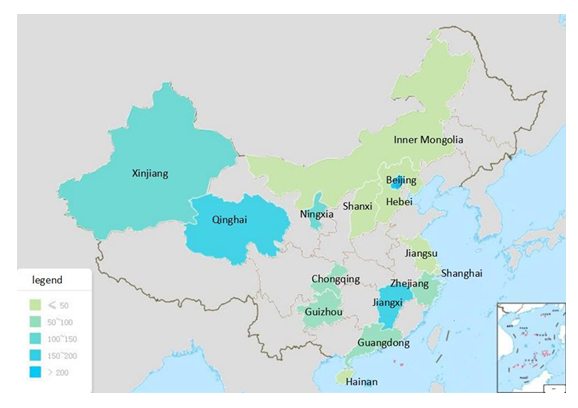
Figure 1: Distribution of questionnaires in provinces that participated in the survey.
The map in Fig.1 is made from the website, http://c.dituhui.com/apps.
|
Total |
||
|
(n=1 187) |
||
|
Level of EMS |
Provincial capital |
266 (22.4%) |
|
City |
714 (60.2%) |
|
|
County |
207 (17.4%) |
|
|
Gender |
Male |
436 (36.7%) |
|
Age, y |
20~29 |
496 (41.8%) |
|
30~39 |
515 (43.4%) |
|
|
40~49 |
144 (12.1%) |
|
|
50~60 |
32 (2.7%) |
|
|
Education |
Technical secondary school |
44 (3.7%) |
|
Junior college |
387 (32.6%) |
|
|
Undergraduate |
708 (59.6%) |
|
|
Postgraduate |
43 (3.6%) |
|
|
Others |
5 (0.4%) |
|
|
EMS providers |
Dispatcher |
256 (21.6%) |
|
Emergency doctor |
494 (41.6%) |
|
|
Emergency nurse |
400 (33.7%) |
|
|
Medical emergency assistant |
37 (3.1%) |
|
|
Working years |
<5 |
503 (42.4%) |
|
9-May |
356 (30%) |
|
|
14-Oct |
196 (16.5%) |
|
|
15-19 |
69 (6%) |
|
|
≥20 |
63 (5.3%) |
|
|
Professional title |
Junior |
713 (60.1%) |
|
Intermediate |
309 (26%) |
|
|
Senior |
66 (5.6%) |
|
|
Others |
99 (8.3%) |
|
|
EMS: Emergency medical service |
||
Table 1: Characteristics of survey respondents. Workload of emergency personnel and recognised OHCA via telephone in 12 hours
4.2. Number of cardiac arrests recognised in 12 hours by dispatchers receiving emergency calls
The distribution of the number of emergency telephone calls accepted by 256 dispatchers within 12 hours is presented in Table 2. The largest proportion was within 50 (80/256, 31.3%), followed by 50–100 (43/256, 16.8%) and 101–150 (39/256, 15.2%). Among the 256 dispatchers, the number of sudden CAs that could be recognised by telephone among the emergency calls received within 24 hours was the highest in 1–3 cases (95 respondents, 37.1%), followed by 0 cases (79, 30.9%), 4–10 cases (60, 23.4%), and more than 10 cases (16, 6.3%). The other six dispatchers were unsure in determining the number of cases recognised to be CA in a 12-hour period.
|
Total |
||
|
Calls received by a dispatcher in 12 hours |
<50 |
80 (31.3%) |
|
50-100 |
43 (16.8%) |
|
|
101-150 |
39 (15.2%) |
|
|
151-200 |
37 (14.5%) |
|
|
201-250 |
10 (3.9%) |
|
|
251-300 |
16 (6.3%) |
|
|
301-350 |
9 (3.5%) |
|
|
>350 |
20 (7.8%) |
|
|
Unsure |
2 (0.8%) |
|
|
Total |
256 (100%) |
|
|
OHCA recognised by dispatcher via telephone in 12 hours |
0 |
79 (30.9%) |
|
1~3 |
95 (37.1%) |
|
|
4~10 |
60 (23.4%) |
|
|
>10 |
16 (6.3%) |
|
|
Unsure |
6 (2.4%) |
|
|
total |
256 |
|
|
Runs by an emergency doctor in 12 hours |
0-4 |
287 (30.8%) |
|
9-May |
352 (37.8%) |
|
|
14-Oct |
180 (19.3%) |
|
|
15-19 |
59 (6.3%) |
|
|
≥20 |
46 (4.9%) |
|
|
Unsure |
7 (0.8%) |
|
|
total |
931 |
|
|
OHCA recognised by an emergency doctor via telephone before arrival at the scene in 12 hours |
0 |
512 (55%) |
|
3-Jan |
261 (28%) |
|
|
10-Apr |
90 (9.7%) |
|
|
>10 |
24 (2.6%) |
|
|
unsure |
44 (4.7%) |
|
|
|
931 |
|
|
EMS: Emergency medical service |
||

Table 2: Workload of emergency personnel and recognised OHCA via telephone in 12 hours.
4.3. Number of cardiac arrests recognised in 12 hours by other staff receiving emergency calls
The distribution of the number of ambulance runs in 24 hours among 931 other emergency personnel is also shown in Table 2. Respondents most frequently did 5–9 runs, i.e., 352 (37.8%); followed by 387
(30.8%) with 0–4 runs, 180 (19.3%) with 10–14 runs,
59 (6.3%) with 15–19 runs, and 46 (4.9%) with ≥20 runs. In addition, 7 respondents (0.8%) were uncertain about the number of runs. Before arriving at the scene, 512 (55.0%) of the 931 emergency personnel never recognised whether the patient had a CA by phone; 261 (28.0%) could recognise 1–3 CA
patients, 90 (9.7%) were able to recognise 4–10
cases, and 24 (2.6%) recognised more than 10 people with CA. In addition, 44 (4.7%) rescuers were unsure of the number of CA patients.
4.4. Monitoring the quality of T-CPR
Among the 352 respondents who believed that the implementation of T-CPR should include the quality of CPR by bystanders, the top three operations to detect the quality of CPR conducted by bystanders were the frequency of chest compression (337, 95.7%), position of hands when compressing (324, 92.0%), and compression duration and number of compression interruptions (298, 84.7%), followed by depth of chest compression (290, 82.4%), frequency of ventilation (if any) (278, 79.0%), whether the chest rebounded during compression (266, 75.6%), and ventilation time (if any) (253, 71.9%).
4.5. Differences among respondents’ characteristics concerning knowledge about T- CPR
Baseline characteristics of respondents showed differences among various aspects of knowledge about T-CPR (Table 3), for which chi-square test values were calculated. Among the 960 (80.9%) respondents who know about T-CPR, the knowledge rate varies among EMS providers from 54.1% to 91.0% (chi-square=38.1, P<.001). Level of EMS (chi-square=27.4, P<.001), education background of EMS providers (Fisher exact test=22.0, P<.001), vocation (chi-square=47.9, P<.001), and professional title (chi-square=13.7, P=0.032) differed in respect of the use of medical priority dispatch system [15] (MPDS). Gender (chi-square=9.6, P<.001) and vocation (chi-square test=82.6, P<.001) varied with regard to monitoring the quality of bystander CPR among 428 out of 1,187 (59.9%) respondents.
|
Know about T- CPR |
Use MPDS |
Monitor the quality of bystander CPR |
||
|
Level of EMS |
Provincial capital level |
218 (82.0%) |
102 (46.8%)* |
96 (59.3%) |
|
City level |
582 (81.5%) |
292 (50.2%) |
275 (62.9%) |
|
|
County level |
160 (77.3%) |
44 (27.5%) |
57 (49.6%) |
|
|
Gender |
Male |
361 (82.8%) |
160 (44.3%) |
165 (57.7%)* |
|
Female |
599 (79.8%) |
278 (46.4%) |
263 (61.4%) |
|
|
Education |
Technical secondary school |
32 (72.7%) |
23 (71.9%)* |
20 (80.0%) |
|
Junior college |
322 (83.2%) |
159 (49.4%) |
144 (64.0%) |
|
|
Undergraduate |
569 (80.4%) |
235 (41.3%) |
245 (56.3%) |
|
|
Postgraduate |
34 (79.1%) |
19 (55.9%) |
18 (66.7%) |
|
others |
3 (60.0%) |
2 (66.7%) |
1 (50.0%) |
|
|
EMS provider |
Dispatcher |
233 (91.0%)* |
122 (52.4%)* |
135 (69.9%)* |
|
Emergency doctor |
399 (80.8%) |
165 (41.4%) |
185 (57.6%) |
|
|
Emergency nurse |
308 (77.0%) |
138 (44.8%) |
100 (53.5%) |
|
|
Medical emergency assistant |
20 (54.1%) |
13 (65.0%) |
8 (61.5%) |
|
|
Professional title |
Junior |
582 (81.6%) |
275 (47.3%)* |
257 (61.3%) |
|
Intermediate |
248 (80.3%) |
101 (40.7%) |
109 (56.8%) |
|
|
Senior |
58 (87.9%) |
22 (37.9%) |
28 (59.6%) |
|
|
Others |
72 (72.7%) |
40 (55.6%) |
34 (60.7%) |
|
|
* P<0.01 EMS: Emergency medical service; MPDS: Medical priority dispatch system. |
||||
Table 3: Differences among respondents’ characteristics regarding knowledge about T-CPR.
4.6. EMS provider factors associated with knowledge of T-CPR in China
In the multivariate analysis (Table 4), a higher workload among dispatchers (P<.001; OR=1.002; 95% CI, 1.001– 1.003) was significantly associated with better knowledge of T-CPR. Emergency doctor (P<.001; OR=0.051; 95% CI, 0.019–0.138), emergency nurse (P=.011; OR=0.347; 95% CI, 0.154–0.786), medical emergency assistant(P=.012; OR=0.337; 95% CI, 0.145–0.784) were associated with worse knowledge of T-CPR.
|
Know about T- CPR |
P |
OR |
95%CI |
||
|
Level of EMS |
Provincial capital level |
218 (82.0%) |
Referenc e |
||
|
City level |
582 (81.5%) |
0.057 |
0.61 3 |
0.371- 1.014 |
|
|
County level |
160 (77.3%) |
0.141 |
0.73 3 |
0.484- 1.108 |
|
|
Age |
0.937 |
1.00 2 |
0.964- 1.041 |
||
|
Education |
Technical secondary school |
32 (72.7%) |
Referenc e |
||
|
Junior college |
322 (83.2%) |
0.417 |
0.42 9 |
0.056- 3.313 |
|
|
Undergraduate |
569 (80.4%) |
0.163 |
0.24 8 |
0.035- 1.756 |
|
|
Postgraduate |
34 (79.1%) |
0.236 |
0.30 5 |
0.043- 2.176 |
|
|
others |
3 (60.0%) |
0.276 |
0.30 3 |
0.035- 2.600 |
|
|
EMS provider |
Dispatcher |
233 (91.0%) |
Referenc e |
|
Emergency doctor |
399 (80.8%) |
0 |
0.05 1 |
0.019- 0.138 |
|
|
Emergency nurse |
308 (77.0%) |
0.011 |
0.34 7 |
0.154- 0.786 |
|
|
Medical emergency assistant |
20 (54.1%) |
0.012 |
0.33 7 |
0.145- 0.784 |
|
|
Working years |
0.225 |
0.97 4 |
0.934- 1.016 |
||
|
Dispatcher’s workload |
0 |
1.00 2 |
1.001- 1.003 |
||
|
Dispatcher recognised CA |
0.203 |
0.97 7 |
0.942- 1.013 |
||
|
Doctor’s workload |
0.266 |
0.98 2 |
0.950- 1.014 |
||
|
Doctor recognised CA |
0.33 |
0.98 4 |
0.953- 1.016 |
||
|
EMS: Emergency medical service; CA: Cardiac arrest. |
|||||
Table 4: EMS providers’ factors associated with knowledge of T-CPR in China.
4.7. Implementation of T-CPR
As shown in Table 5, of the 960 participants who knew T-CPR, 213 (22.2%) occasionally recognised CA by phone for patients with unconsciousness, 205 (21.4%) sometimes recognised CA, 190 (19.8%) often recognised CA, 188 (19.6%) always recognised CA, and 164 (17.1%) never recognised CA. Of the 796 respondents who recognised CA events, 714 (89.7%) will further implement T-CPR, of whom 236 (29.6%) always, 167 (21.0%) sometimes, 162 often (20.4%), and 149 (18.7%) occasionally would implement T-CPR, while another 82 (10.3%) said they would not implement T-CPR. In the implementation of T-CPR, the most commonly recommended treatment method for bystanders is chest compression + artificial breathing (310 respondents, 43.4%), followed by simple chest compression (216, 30.3%) and chest compression + artificial respiration + AED (140, 19.6%). In the implementation of T-CPR, the percentage of bystanders who could start CPR according to telephone instructions was 5% (202 respondents, 28.3%), followed by 50% and above (153, 21.4%) and 10% (124, 17.4%). The proportion of onlookers who continued to implement CPR until arrival of first responders was 5% (222 respondents, 31.1%), followed by 50% and above (131, 18.3%) and 10% (92, 12.9%).
|
Total |
||
|
For patients with unconsciousness, determine the frequency of CA over the phone |
occasionally |
213 (22.2%) |
|
sometimes |
205 (21.4%) |
|
|
often |
190 (19.8%) |
|
|
always |
188 (19.6%) |
|
|
Never |
164 (17.1%) |
|
|
Frequency of T-CPR when recognised to be CA by telephone |
occasionally |
236 (29.6%) |
|
sometimes |
167 (21%) |
|
|
often |
162 (20.4%) |
|
|
always |
149 (18.7%) |
|
|
Never |
82 (10.3%) |
|
|
Most recommended bystander treatment |
Chest compression + artificial respiration |
310 (43.4%) |
|
Simple chest compressions |
216 (30.3%) |
|
|
Chest compression + artificial respiration + AED |
140 (19.6%) |
|
|
Chest compression + AED |
40 (5.6%) |
|
|
Pure artificial respiration |
8 (1.1%) |
|
|
Percentage of onlookers who started CPR with telephone guidance |
5% |
202 (28.3%) |
|
50% and above |
153 (21.4%) |
|
|
10% |
124 (17.4%) |
|
|
20% |
56 (7.8%) |
|
|
0% |
50 (7%) |
|
|
30% |
43 (6%) |
|
|
15% |
22 (3.1%) |
|
|
40% |
21 (2.9%) |
|
|
25% |
20 (2.8%) |
|
|
45% |
13 (1.8%) |
|
|
35% |
10 (1.4%) |
|
|
Percentage of bystanders who continue to implement CPR to the arrival of first responders |
5% |
222 (31.1%) |
|
50% and above |
131 |
|
(18.3%) |
||
|
10% |
92 (12.9%) |
|
|
0% |
75 (10.5%) |
|
|
20% |
57 (8%) |
|
|
30% |
41 (5.7%) |
|
|
15% |
34 (4.8%) |
|
|
25% |
20 (2.8%) |
|
|
40% |
19 (2.7%) |
|
|
35% |
13 (1.8%) |
|
|
45% |
10 (1.4%) |
Table 5: Implementation of T-CPR
5. Discussion
Globally it is estimated that, on average, less than 10% of all patients with OHCA will survive [16]. T- CPR can effectively improve bystander CPR, pre- hospital return of spontaneous circulation (ROSC), and even the prognosis of OHCA patients. A before- and-after interventional trial of dispatcher-assisted CPR for out-of-hospital CA in Singapore showed a significant increase in bystander CPR and ROSC after the intervention [17]. Implementation of a regional T-CPR programme and outcomes after out- of-hospital CA indicated that implementation of a guideline-based T-CPR bundle of care was independently associated with significant improvements in the provision and timeliness of T- CPR, survival to hospital discharge, and survival with favourable functional outcome [18]. In a study of the effect of a dispatcher-assisted CPR programme and location of out-of-hospital CA on survival and neurological outcomes for out-of-hospital CA cases in private settings, bystander CPR was associated with improved neurological recovery only when dispatcher assistance was provided [10].
The results of our questionnaire survey showed that there are some regional differences among the 15 provinces surveyed. Knowledge of T-CPR varied among vocation of EMS providers (dispatcher, doctor, nurse, and others). Whether use MPDS was significantly differed in terms of the level of EMS unit, background of education, vocation, and professional title. According to the survey, the increased workload of dispatchers may improve their knowledge of T-CPR. More dispatchers appear to know about T-CPR, which suggested dispatches may have more chances to guide CPR by telephone because they work via phone. Some additional aspects should be acknowledged as part of these considerations. There is a lack of systematic research on CPR in China, and clinical research on T-CPR is also inadequate. It is necessary to study current guidelines and formulate new ones suitable for China's national circumstances.
6. Limitation
First, this questionnaire was distributed online and was not distributed widely to EMS personnel across every city in China, so the sample cohort was lacking in size. Although there is a risk of selection bias, it is assumed that the EMS population in general has similar difficulties when facing T-CPR. Second, this survey may not have fully captured the complexity of different responses to OHCA across China. Therefore, there may be other questions to be asked that have not been considered in this survey.
7. Conclusion
Throughout China, there are substantial and important differences in the understanding and implementation of T-CPR among EMS personnel. Further professional training in T-CPR is urgently required to improve outcomes of OHCA in China.
Declarations
Ethics approval and consent to participate: see supplemental material: Ethics approval.pdf
Consent for publication
All authors agreed to publish the paper
Availability of data and materials
Data are available upon reasonable request
Competing interests
No
Acknowledgements
We wish to thank all dedicated survey respondents for their participation, and Beijing Municipal Science & Technology Commission for funding. We thank Hugh McGonigle, from Liwen Bianji, Edanz Group China (www.liwenbianji.cn/ac), for editing the English text of a draft of the manuscript.
Conflicts of Interest and Source of Funding
There are no financial and personal relationships with other people or organisations that could influence this paper. COI statements are available for all authors.
The study was funded by Ministry of Science and Technology of the People’s Republic of China, the National Science and Technology Fundamental Resources Investigation Project (Item number 2018FY100600) and Beijing Municipal Science and Technology Commission (Item number Z191100004419003). The funding organisations had no influence on the data analysis or preparation of the manuscript.
References
- Myat A, Song KJ , Rea T. Out-of-hospital cardiac arrest: current concepts. The Lancet 391 (2018): 970-979.
- T-CPR Letter from the Chairman of the Taskforce[EB/OL]. https://cpr.heart.org/en/resuscitation- science/telephone-cpr/meet-the-taskforce. 2019-12-30.
- Atwood C, Eisenberg MS, Herlitz J, et al. Incidence of EMS-treated out-of-hospital cardiac arrest in Resuscitation 67 (2005): 75-80.
- Nagao K, Nonogi H, Yonemoto N, et Duration of Prehospital Resuscitation Efforts After Out-of-Hospital Cardiac Arrest. Circulation (2016).
- Hua W, Zhang LF, Wu YF, et al. Incidence of sudden cardiac death in China: analysis of 4 regional populations 54 (2009): 1110- 1118.
- Shao F, Li CS, Liang LR, et al. Outcome of out-of-hospital cardiac arrests in Beijing, Resuscitation 85 (2014): 1411-1417.
- Perkins GD, Travers AH, Berg RA, et al. Part 3: adult basic life support and automated external defibrillation: 2015 International Consensus on Cardiopulmonary Resuscitation and Emergency Cardiovascular Care Science with Treatment Resuscitation 95 (2015): 4369.
- Mirhaghi A, Shafaee H, Malekzadeh J, et al. Recognizing Sudden Cardiac Arrest May Require More Than Two Questions during Telephone Triage: Developing a Complementary Bull Emerg Trauma 5 (2017): 104-109.
- Kellermann AL, Hackman BB, Somes Dispatcher-assisted cardiopulmonary resuscitation. Validation of efficacy. Circulation 80 (1989): 1231-1239.
- Ro YS, Shin SD, Lee YJ, et al. Effect of Dispatcher- Assisted Cardiopulmonary Resuscitation Program and Location of Out- of-Hospital Cardiac Arrest on Survival and Neurologic Outcome. Ann Emerg Med 69 (2017): 52-61.
- Nolan JP , Soar J, Zideman DA , et European Resuscitation Council Guidelines for Resuscitation 2010 Section 1. Executive summary. Resuscitation 81 (2010): 1219- 1276.
- Travers AH, Perkins GD, Berg RA, et al. Part 3: Adult Basic Life Support and Automated External Defibrillation: 2015 International Consensus on Cardiopulmonary Resuscitation and Emergency Cardiovascular Care Science With Treatment Circulation 132 (2015): 51-83
- Panchal AR, Berg KM, Cabañas JG, et al. 2019 American Heart Association Focused Update on Systems of Care: dispatcher- assisted cardiopulmonary resuscitation and cardiac arrest centers: an update to the American Heart Association Guidelines for Cardiopulmonary Resuscitation and Emergency Cardiovascular Care. Circulation 140 (2019): 895-903.
- Wang JH, Zheng K, Li XD, et al. Cognitive survey of telephone cardiopulmonary resuscitation among emergency Chinese Journal of Emergency Medicine|Chin J Emerg Med 29 (2020): 49- 53.
- Zachariah BS, Pepe PE. The development of emergency medical dispatch in the USA: a historical perspective. European Journal of Emergency Medicine Official Journal of the European Society for Emergency Medicine 2 (1995):
- Lancet T. Out-of-hospital cardiac arrest: a unique medical emergency. The Lancet 391 (2018):
- Harjanto S, Na MXB, Hao Y, et A before–after interventional trial of dispatcher-assisted cardio-pulmonary resuscitation for out-of-hospital cardiac arrests in Singapore.
- Bobrow BJ, Spaite DW, Vadeboncoeur TF, et al. Implementation of a regional telephone cardiopulmonary resuscitation program and outcomes after out-of-hospital cardiac arrest. JAMA Cardiology (2016).