
Measurement of Intra-Renal Resistive Index by Spectral Doppler Ultrasound for Early Detection of Diabetic Nephropathy
Article Information
Dr Anika Mahfuz1, Dr Saieef Zaman2, Dr. Kazi Shantono Saiham3, Dr. Md. Immam Hossin4, Dr S M Yunus Ali5, Dr Kamrun Nahar6, Dr Md. Rasel Ahmad7
1Resident Doctor, Radiology and Imaging, Sir Salimullah Medical College, Dhaka.
2Resident Doctor, National Institute of Kidney Disease and Urology, Dhaka.
3Consultant radiologist, Doctors Care General Hospital, Brahmanbaria.
4PhD Fellow, Bangladesh Medical University (OSD), DGHS, Mohakhali, Dhaka, Bangladesh.
5Associate professor, Department of Urology, Bangladesh Medical University, Dhaka.
6Professor of Forensic Medicine, International Medical College.
7Assistant Professor, Medical Education, Department of Public Health and Informatics, Bangladesh Medical University, Dhaka, Bangladesh.
*Corresponding author: Assistant Professor, Medical Education, Department of Public Health and Informatics, Bangladesh Medical University, Dhaka, Bangladesh.
Received: 19 November 2025; Accepted: 28 November 2025; Published: 09 December 2025
Citation: Dr Anika Mahfuz, Dr Saieef Zaman, Dr Kazi Shantono Saiham, Dr Md. Immam Hossin, Dr S M Yunus Ali, Dr Kamrun Nahar, Dr Md. Rasel Ahmad. Measurement of Intra-Renal Resistive Index by Spectral Doppler Ultrasound for Early Detection of Diabetic Nephropathy. Journal of Radiology and Clinical Imaging. 8 (2025): 117-120.
View / Download Pdf Share at FacebookAbstract
Background: Diabetic nephropathy (DN) is a major cause of end-stage renal disease and is closely associated with long-term poor control of diabetes. Early detection is essential to halt the progression of diabetic nephropathy. Aim: The aim of the present study is to assess the ability of renal resistive index in differentiating patients with diabetes mellitus with long duration of diabetes, who have diabetic nephropathy. Results: Fiftyseven patients (mean age 56.39 ± 8.54 years) were included in the study. Diabetic nephropathy was observed in 82.5%, the proportion being slightly higher among men 88.9% than women 76.7%. In addition, intrarenal resistive index (RI) bilaterally was elevated in the majority of patients RI > 0.7 reflecting increased intrarenal vascular resistance. High RI had a close agreement 89.4% with biochemical evidence of nephropathy. The intrarenal RI proved its strong validity 90% sensitivity, 70% specify, 87% accuracy and a positive predictive value of 93% as a noninvasive method in the pre-clinical assessment of overt diabetic nephropathy. Materials and Methods: This cross-sectional observational study was performed in the Department of Radiology and Imaging, Sir Salimullah Medical College Hospital, Dhaka from January 2023 to December 2024. A group of 57 men and women selected according to strict inclusion/exclusion criteria. The study was approved by the institutional review board and adhered to ethical guidelines outlined in the Declaration of Helsinki. All patients underwent an evaluation of the intrarenal resistive index (RI) by spectral Doppler ultrasound. Statistical analyses were done with the aid of SPSS software (version 26), and all values are expressed as mean ± SD where applicable statistical tests were used. Conclusion: Spectral Doppler ultrasonography has a good sensitivity and specificity in estimating the RI. RI is a reliable and non-invasive detector for diabetic nephropathy. It is simple, safe, reliable and cost-effective and may be convenient for general screening of early diabetic nephropathy.
Keywords
<p>Diabetic nephropathy; Sensitivity; Specificity; proteinuria; glomerular filtration rate (GFR).</p>
Article Details
1. Introduction
Diabetic nephropathy is still the most common cause of end-stage renal disease worldwide, and early diagnosis is essential, because an intervention at this stage can control the development of chronic kidney disease (CKD) and its complications [1,2]. Conventional surrogates of renal injury in diabetes including albuminuria and reduced eGFR are clinically useful but generally develop after substantial microvascular and hemodynamic renal damage has already transpired [3,4].
Intravascular renal vascular resistance is a predominant feature of the pathophysiology of diabetic nephropathy. The intrarenal resistive index (RI), as assessed by spectral Doppler ultrasound, is a parameter that indicates hemodynamic alterations in interlobar and arcuate arteries of the kidney and provides a non-invasive approach to microvascular renal damage [5,6]. Several studies in diabetes have demonstrated that RI is higher in those with nephropathy compared to those without, and RI correlates positively with albuminuria and inversely with eGFR as well as structural vascular changes such as arteriolosclerosis [6,7,8].
During the last 10 years, there has been increasing enthusiasm for testing the value of Doppler-derived intrarenal RI as a supplementary test in diabetic nephropathy, especially in early detection before evident biochemical changes ensue. Its additional value has been confirmed by means of systematic reviews and prospective studies, but heterogeneity in methodology (Doppler technique, operator experience, cut-off values) has interfered with their general clinical application [9,10,11]. Furthermore, as RI represents not only intrarenal vascular resistance but also systemic arterial stiffness and pulse pressure, thoughtful interpretation relative to patient age and the presence of hypertension /cardiac comorbidity is needed [12].
In the context of these assumptions, this study was undertaken with an objective to evaluate the diagnostic accuracy of intrarenal RI (> 0.70) on spectral Doppler ultrasound in long-standing type 2 diabetes mellitus patients for early detection of diabetic nephropathy by correlating findings on Doppler US with standard biochemical parameters (serum creatinine, urinary albumin, eGFR). " We found that elevated RI had high sensitivity and PPV in detecting nephropathy, suggesting it might be used as a non-invasive screening tool in the radiology departments.
2. Materials and Methods
It was a cross-sectional study and was done in the Department of Radiology and Imaging of Sir Salimullah Medical College (SSMC), Dhaka, Bangladesh from 2023 to 2024. Fifty-seven patients with type 2 diabetes mellitus and clinical suspicion of diabetic nephropathy were enrolled by purposive sampling.
Inclusion criteria included patients being treated for at least 10 years for type 2 diabetes or clinical evidence of nephropathy. Excluded patients were those who had had obstructive uropathy, a background of glomerulonephritis, single or transplant kidney, and drug- or radiation-induced nephropathy. The sample size was estimated by the formula for diagnostic test, and 57 individuals were obtained.
Demographic and clinical characteristics, as well as biochemical and Doppler ultrasonographic findings were retrieved. Intrarenal RI was quantified through Doppler ultrasonography, with a value of >0.7 indicative of nephropathy. Grey scale, color Doppler and spectral Doppler imaging were performed in each patient to quantify biochemical measures including serum creatinine, urinary albumin and eGFR. The time for each examination was 30-40 minutes per patient. Doppler observations were then compared with biochemical values to evaluate diagnostic agreement.
3. Results
The distribution of demographic, Doppler ultrasound findings and biochemical correlation in the sample population are presented below in the tables and figures:
|
Age group in year |
Frequency |
Percentage |
|
<40 |
4 |
7 |
|
40-50 |
10 |
17.5 |
|
51-60 |
26 |
45.6 |
|
61-70 |
17 |
29.8 |
|
Mean age(±SD) in years |
56.39±8.54 in years |
Table 1: Distribution of participants by Age (n = 57)
Table 1 shows the mean age of participants was 56.39±8.54, and the most respondents 45.6% were in their 51 to 60 year-old range.
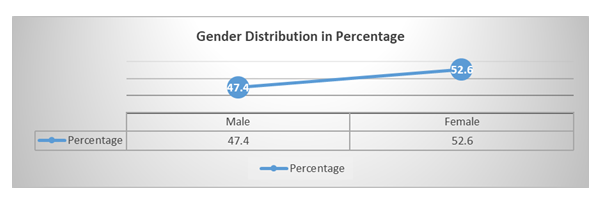
Figure 1: Gender distribution among participants n=57.
Figure 1 displays, most of the respondents were female 52.6%, and only 47.4% participants were male.

Figure 2: Prevalence of Diabetic Nephropathy in the Study Population (n = 57)
Figure 2 shows that among study population, 24 of 27 males 88.9% and 23 of 30 females 76.7% had diabetic nephropathy.
|
RI category |
n |
Mean |
Std. Deviation |
|
|
<.7 |
Lt. renal resistive index |
12 |
.6460 |
.02413 |
|
Rt. renal resistive index |
12 |
.6340 |
.04116 |
|
|
>.7 |
Lt. renal resistive index |
45 |
.7819 |
.07209 |
|
Rt. renal resistive index |
45 |
.7751 |
.06111 |
|
Table 2: Results of Renal Arterial Doppler in Cases with Suspected Diabetic Nephropathy (n = 57)
Table 2 and 3 illustrates The majority of presumed diabetic nephropathy patients showed renal resistive index levels (>0.7) that were higher in both kidneys, and this suggested increased intrarenal vascular resistance corresponding to diabetic nephropathy.
|
Doppler finding |
Biochemical findings |
Total Total |
|
|
Positive |
Negative |
||
|
Positive(RI>.7) |
42 |
3 |
45 |
|
Negative(RI<.7) |
5 |
7 |
12 |
|
Total |
47 |
10 |
57 |
Table 3: Correlation of Intra-Renal Resistive Index with Biochemical Parameters in Suspected Diabetic Nephropathy (n = 57)
Association between high Renal Resistive Index (RI > 0.7) and biochemistry positive diabetic nephropathy was also very significant with raised values being found in 42 out of 47 biochemically proven cases.
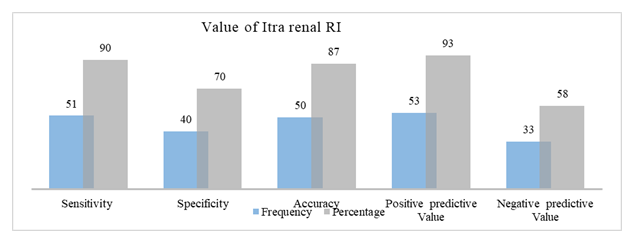
Figure 3: Distribution of the diagnostic performance of intra-renal resistive index in diagnosing diabetic nephropathy (n = 57)
Figure 3 shows Intra-renal RI had high sensitivity and specificity 90%, 70%. Overall accuracy was 87% while the positive predictive value, and hence the reliability for identifying diabetic nephropathy, was high 93%.
4. Discussion
Diagnostic performance of intrarenal resistive index in detection of diabetic nephropathy. Dominant bilateral RI >0.70 were found in most patients, significantly associated with biochemical markers of nephropathy 89.4%. The specificity and sensitivity of the test was found to be 70%, and 90% respectively, with overall accuracy of 87%.
Our results are in agreement with previous studies that found elevated RI values in diabetic patients with nephropathy [7,12]. D’Souza et al. [12] and Khairallah et al. [7] also observed high accuracy at comparable RIs cut-off. These findings lend support to the potential of RI for diagnosing early renal damage, which may precede overt biochemical abnormalities, as has been suggested [9,10].
The higher RI reflects the greater intrarenal vascular resistance associated with diabetic microangiopathy and systemic arterial stiffness [2,5]. This accounts for its relationship with established diabetes and early nephropathy. Other studies have described relationships of RI with albuminuria and decreased eGFR, indicating that it has a clinical basis [6].
Doppler ultrasonography has major advantages; it is non-invasive, inexpensive and may detect preclinical vascular changes [11,13]. This is particularly useful in resource-poor settings where routine biochemical monitoring may be challenging. The higher prevalence of nephropathy among men 88.9% observed in the present study would suggest that substantially higher vascular risk is associated, as previously reported.
However, some limitations exist. Being a cross-sectional study, it is not possible to infer causation. Moderate specificity 70% could indicate false positives, since a rise in RI is described as hypertension or arteriosclerosis [10,3]. The small single-center sample and arbitrary cut-off of RIs may also limit generalization [4,8].
However, the high degree of diagnostic agreement between Doppler and biochemical evidence does in turn reinforce the validity of our findings. Larger, multicenter, long-term prospective studies are necessary to confirm the prognostic value of RI and in its follow-up [1].
5. Conclusion
The intrarenal resistive index estimated by Doppler ultrasonography is sensitive and specific enough for early diagnosis of diabetic nephropathy. It is a reliable, inexpensive and non-invasive technique that adds value to the biochemistry of diabetic patients.
6. Declaration of Interest
The authors affirm that they have no known disagreements of interest that could have persuaded the conduct or writing of this study.
7. Conflict of Interest
None to proclaim.
8. Authors’ Contributions
Dr Anika Mahfuz intellectualized the study and invented the methodology. Dr Saieef Zaman and Dr. Kazi Shantono Saiham contributed data management and statistical evaluation. Dr. Md. Immam Hossin, Dr S M Yunus Ali helped with manuscript writing and critical corrections. Dr Md. Rasel Ahmad afforded final manuscript endorsement. All authors examined and accepted the final version.
References
- Li H, Zhou H, Zhang T, et al. Establishment of the role of renal arterial resistance index in differentiation between diabetic nephropathy and nondiabetic kidney disease. Front Endocrinol 12 (2022): 731187.
- Darabont R, Vinereanu D, et al. The value of the renal resistive index in various clinical settings. Diagnostics 13 (2023): 1687.
- Kharsa C, Beaini C, Chelala D, Aoun M. Relationship of renal resistive indices with disease progression and death in chronic kidney disease. BMC Nephrol 24 (2023): 348.
- Renberg M, Kilhamn N, Lund K, et al. RRI’s measurements by a novice sonographer in a normal population: utility of RRI to shock wave lithotripsy. Ultrasound J 12 (2020): 28.
- Tublin ME, Bude RO, Platt JF. The resistive index in renal Doppler sonography: facts and artifacts. AJR Am J Roentgenol 180 (2003): 885–892.
- Sistani SS, Alidadi A, Moghadam AA, Mohamadnezhad F, Ghahderijani BH. Comparison of renal arterial resistive index in diabetic nephropathy stage 0–4. Eur J Transl Myol 29 (2019): 8364.
- Khairallah MK, Sobh MA, Mansour E, Ibrahim R, Hassan M. Renal resistive index: a promising parameter in the early diagnosis of diabetic nephropathy. Egypt J Hosp Med 90 (2023): 1983–1987.
- Khan A, Ahmed A, Bhutta MR, Zafar I, Khan MNN, Ehsan JN. Correlation of resistive index and serum creatinine in diabetic nephropathy patients. Pak Armed Forces Med J 73 (2023): 435–438.
- Venables HK, Wiafe YA, Adu-Bredu TK. Diagnostic role of Doppler ultrasound in early diagnosis of diabetic kidney disease: a systematic review and meta-analysis. Ultrasound 29 (2021): 141–149.
- Provenzano M, Rivoli L, Garofalo C, et al. Factors that influence the renal resistive index in patients with chronic kidney disease. PLoS ONE 15 (2020): e0230020.
- Maksoud AAA, Augusto J, et al. The renal resistive index: a new parameter in the diagnosis of diabetic nephropathy. Journal (Open Access) (2019): 6787385.
- D’Souza AVL, D’Souza RCC, K PA, Braggs A. The renal resistive index as an early predictor of renal impairment in patients with type 2 diabetes mellitus. Clin Res J Intern Med 5 (2024): 129–133.
- Choudhary P, Rani M, Sengar G, et al. Renal resistive index as a new noninvasive early marker of nephropathy in children with type 1 diabetes mellitus. Cureus 17 (2025): e82202.