
Green Walls, Emotional Well-Being, and Women’s Positive Body Image: Evidence from a Multicultural University Campus
Article Information
Diana Saadi*
Institute of Earth Sciences, The Hebrew University of Jerusalem, Jerusalem, Israel
Corresponding Author: Diana Saadi, Institute of Earth Sciences, The Hebrew University of Jerusalem, Jerusalem, Israel.
Received: 21 December 2025; Accepted: 26 December 2025; Published: 13 January 2026
Citation: Diana Saadi. Green Walls, Emotional Well-Being, and Positive Body Image among Women: Evidence from a Multicultural University Campus. Journal of Women’s Health and Development. 9 (2026): 01-12.
View / Download Pdf Share at FacebookAbstract
Background: Exposure to urban green environments is consistently associated with improved emotional well-being and psychological restoration. However, limited evidence exists on whether micro-scale greening interventions such as green walls yield comparable benefits across social groups within shared institutional environments. Drawing on environmental justice perspectives, this study examines whether exposure to a campus-based green wall differentially influences women’s emotional well-being and state positive body image (SPBI) across ethnic groups. Methods: We conducted a within-subject quasi-experimental field study among Jewish and Arab female students at the Hebrew University of Jerusalem. Participants were exposed to two campus conditions: a vegetated green wall and a visually comparable non-vegetated gray wall. Outcomes included positive affect (PANAS) and SPBI (SBAS-2). We estimated condition effects using linear mixed-effects models and tested ethnic differences via exposure-by-ethnicity interaction terms. Moderated mediation models assessed whether positive affect mediated the association between green wall exposure and SPBI and whether the indirect effect varied by ethnicity. Results: Green wall exposure was associated with higher positive affect and SPBI among women overall. The magnitude of these effects was substantially stronger among Arab women than Jewish women, as indicated by significant exposure-by-ethnicity interactions. Positive affect partially mediated the association between green wall exposure and SPBI, with a larger proportion of the effect mediated among Arab women, consistent with stronger affective responsiveness to green exposure. Conclusions: Campus green walls may function as equity-relevant restorative features, disproportionately benefiting women from environmentally disadvantaged backgrounds. These findings highlight the importance of equity-oriented design in academic environments and support the integration of micro-scale greening interventions into campus well-being and inclusion strategies.
Keywords
Green walls; Environmental justice; Women’s well-being; Positive affect; State positive body image; University campuses
Green walls articles; Environmental justice articles; Women?s well-being articles; Positive affect articles; State positive body image articles; University campuses articles
Article Details
Introduction
Urban environments are increasingly recognized as key determinants of mental health and well-being. High levels of noise, air pollution, thermal stress, congestion, and social pressure characterize many urban settings and are associated with chronic stress, emotional dysregulation, and impaired cognitive functioning [1,2]. In contrast, exposure to natural environments has been consistently linked to beneficial psychological, physiological, and cognitive outcomes, including stress reduction, improved mood, enhanced regulation of the autonomic nervous system, and cognitive restoration [3-5].
A substantial body of experimental and quasi-experimental research demonstrates that even short visits to green environments, such as urban parks, tree-lined streets, or small green spaces, can produce measurable short-term benefits [6]. Field experiments among women have shown that brief exposure to outdoor urban environments, compared to remaining indoors, leads to improvements in emotional state, physiological stress markers, and cognitive performance [7]. These findings support psychophysiological stress recovery theory, which posits that natural environments evoke positive affective responses and facilitate rapid recovery from stress [3], as well as attention restoration theory, which emphasizes the role of nature in replenishing depleted attentional resources [4].
Beyond general health effects, research has begun to examine the relationship between green exposure and positive body image, particularly among women. State positive body image (SPBI) refers to momentary feelings of body appreciation, respect, and acceptance, which are sensitive to situational cues and environmental contexts. Experimental studies suggest that exposure to natural environments can temporarily enhance SPBI through affective and attentional pathways, potentially reducing appearance-related self-surveillance and promoting embodied comfort. However, empirical evidence remains limited, especially in real-world settings and within socially diverse populations.
Importantly, the benefits of green exposure are not distributed equally across social groups. Environmental justice scholarship demonstrates that access to high-quality green infrastructure is socially patterned, with ethnic minorities and marginalized communities experiencing chronic underexposure to urban greenery [8,9]. Such inequalities may shape not only baseline health outcomes but also responsiveness to environmental interventions.
Evidence from short-term exposure studies suggests that populations with limited everyday access to green environments may exhibit stronger psychophysiological and emotional responses when they encounter green environments, consistent with compensatory or diminishing-returns models of environmental benefits [10].
In the Israeli context, Arab towns and neighbourhoods are characterized by a persistent lack of public green spaces compared to Jewish localities, reflecting long-standing planning inequalities. Field experiments conducted among Arab and Jewish women in Israel demonstrate ethnic differences in emotional, physiological, and cognitive responses to urban environments, including parks, residential areas, and city centres [11,7]. These studies indicate that while green environments are broadly restorative, women from environmentally disadvantaged contexts may show stronger or more variable responses to environmental change. Moreover, autonomic nervous system responses to environmental exposure, measured via heart rate variability, have been shown to differ between Arab and Jewish women, particularly in green settings and during boundary-crossing experiences [11].
University campuses provide a distinctive spatial and social setting in which diverse populations share everyday environments while carrying unequal histories of environmental exposure. Although campuses are often perceived as neutral or egalitarian spaces, they may reproduce broader urban inequalities through the uneven distribution and design of restorative features. In recent years, green walls, vertical vegetated installations integrated into building façades, have emerged as a prominent form of urban greening in dense environments where horizontal green space is limited. While green walls are increasingly promoted for their aesthetic, climatic, and sustainability benefits, their potential psychosocial effects, particularly in academic settings, remain underexplored [12-14].
Critically, little is known about whether campus-based green walls may differentially affect women from distinct ethnic backgrounds. For women, who are disproportionately affected by body image concerns and environmental stressors, such micro-scale green interventions may play an essential role in shaping momentary well-being, comfort, and self-perception.
Drawing on evidence that Arab women in Israel experience lower baseline access to green environments and demonstrate heightened responsiveness to environmental exposure [11,7], it is plausible that green walls may function as compensatory restorative elements, yielding more substantial psychological benefits for this group.
To address this gap, we conducted a within-subject quasi-experimental field study among Jewish and Arab female students at the Hebrew University of Jerusalem. We examined whether brief exposure to a campus green wall, compared to a non-vegetated gray wall, was associated with changes in positive affect and state positive body image, and whether these effects differed by ethnicity. We further tested whether positive affect mediated the association between green wall exposure and SPBI and whether the indirect pathway varied across ethnic groups.
Study Aims and Hypotheses
The present study aims to examine the short-term effects of exposure to a campus-based green wall on women’s psychological well-being, with particular emphasis on state positive body image (SPBI) and emotional responses. Building on experimental evidence demonstrating the restorative effects of green environments on women’s emotional, physiological, and cognitive functioning [7], this study investigates whether such effects vary across ethnic groups within a shared academic setting.
Specifically, the study applies an empirical, within-subject quasi-experimental framework grounded in established literature from environmental psychology, environmental justice, and gender-sensitive health research. By comparing women’s responses to exposure to a vegetated green wall versus a non-vegetated built environment, the study examines both overall effects and group-specific differences, with a particular focus on ethnic disparities shaped by unequal histories of access to urban green environments.
The study has three primary aims
- To assess the effect of exposure to a campus green wall on women’s state positive body image and emotional well-being, in comparison to exposure to a non-vegetated gray wall.
- To examine whether the magnitude of these effects differs between Jewish and Arab female students, reflecting unequal baseline exposure to urban green environments and broader environmental inequalities.
- To investigate the mediating role of positive affect in the relationship between green wall exposure and state positive body image, and to determine whether this mediating pathway varies by ethnicity.
Drawing on prior findings indicating that women from environmentally disadvantaged contexts often exhibit stronger psychophysiological and emotional responses to green exposure [11,7], as well as theoretical models of compensatory environmental benefits, the following hypotheses were tested:
- • H1: Exposure to a campus green wall is associated with higher levels of state positive body image and positive affect compared to exposure to a non-vegetated gray wall.
- • H2: The positive effects of green wall exposure on state positive body image and emotional well-being are stronger among Arab women than among Jewish women.
- • H3: Positive affect mediates the relationship between green wall exposure and state positive body image, with a larger proportion of the effect mediated among Arab women compared to Jewish women.
Together, these aims and hypotheses provide a structured empirical framework for examining how micro-scale green interventions within academic environments interact with broader patterns of environmental inequality to shape women’s emotional and embodied well-being.
Theoretical Background
Green Environments and Psychophysiological Restoration
The restorative effects of natural environments have been extensively theorized and empirically documented within environmental psychology and public health research. Two complementary theoretical frameworks, Stress Recovery Theory (SRT) and Attention Restoration Theory (ART), provide a robust foundation for understanding how exposure to green environments influences emotional, physiological, and cognitive functioning.
Stress Recovery Theory posits that exposure to non-threatening natural environments elicits rapid affective and physiological responses, including reductions in stress, negative emotions, and autonomic arousal, alongside increases in positive affect [3]. These responses are largely automatic and precede conscious cognitive appraisal. Evidence from laboratory experiments, field studies, and epidemiological research consistently supports this framework, demonstrating improvements in mood, heart rate variability, and stress-related biomarkers following exposure to green environments [3].
Attention Restoration Theory complements this affective pathway by emphasizing cognitive mechanisms. According to ART, prolonged exposure to demanding urban environments depletes directed attention resources, leading to mental fatigue. Natural environments facilitate recovery by engaging involuntary attention through fascination while simultaneously providing a sense of being away, coherence, and compatibility [4]. Even brief encounters with greenery, such as small parks, gardens, or tree-lined streets, have been shown to support attentional recovery and cognitive performance.
Importantly, accumulating empirical evidence indicates that short-term exposure to green environments is sufficient to produce measurable benefits. Field experiments demonstrate that visits lasting as little as 10-45 minutes can improve emotional states, autonomic nervous system regulation, and cognitive functioning [6,7]. These findings challenge the notion that prolonged or immersive exposure to nature is required for restoration and underscore the importance of small-scale, everyday green interventions in urban contexts.
Women, Emotional Sensitivity, and Environmental Exposure
Gender is a critical factor shaping responses to environmental stressors and restorative settings. A substantial body of research indicates that, on average, women exhibit heightened emotional and physiological sensitivity to environmental conditions, particularly in stress regulation, affective processing, and bodily awareness. Women also report higher levels of body-related self-monitoring and appearance-related concerns, which may increase susceptibility to environmental cues that influence embodied experience.
Empirical studies focusing on women demonstrate that exposure to green environments yields pronounced emotional and physiological benefits, including reduced stress, improved mood, and enhanced autonomic regulation. Field experiments conducted among women in Israel show that short visits to urban green environments, compared to remaining indoors, are associated with improvements across psychological, physiological, and cognitive domains [7]. These findings highlight the importance of examining women’s responses to environmental exposure in real-world urban settings.
Within this literature, state positive body image (SPBI) has emerged as a relevant yet underexamined outcome. SPBI captures momentary experiences of body appreciation, acceptance, and comfort, which are sensitive to situational and environmental contexts. Exposure to natural environments has been shown to enhance SPBI by reducing self- objectification, limiting appearance-based social comparison, and fostering embodied presence [15,16]. However, much of the existing body image research relies on laboratory- based designs or homogeneous samples, leaving gaps in understanding how everyday environments shape body-related experiences among diverse groups of women.
Environmental Inequality, Ethnicity, and Differential Responsiveness
Environmental justice research consistently demonstrates that access to green environments is unevenly distributed across social and ethnic groups. Minority and marginalized populations are more likely to reside in areas characterized by limited availability, poorer quality, and reduced accessibility of green infrastructure. These spatial inequalities accumulate over time, shaping baseline exposure levels, health trajectories, and coping resources [8,9].
In Israel, Arab towns and neighborhoods are characterized by long-standing underinvestment in public green spaces compared to Jewish localities, reflecting structural planning and resource allocation disparities. Empirical studies among Arab and Jewish women indicate that ethnicity moderates emotional, physiological, and cognitive responses to environmental exposure. While green environments are broadly restorative for both groups, Arab women often demonstrate stronger or more variable responses to environmental change, particularly in green settings [11,7].
These patterns align with compensatory exposure and diminishing returns models, which posit that individuals with lower baseline access to beneficial environments derive disproportionately greater benefits when exposure occurs, whereas those with higher routine exposure experience smaller marginal gains [10]. Ethnic differences in environmental responsiveness may also reflect broader social stressors, perceived safety, discrimination, and culturally patterned mobility practices.
Physiological evidence further supports this interpretation. Studies measuring autonomic nervous system activity via heart rate variability reveal differential responses between Arab and Jewish women across environmental contexts, particularly in green environments and during boundary-crossing experiences [11]. Collectively, this literature demonstrates that environmental effects are not uniform and that ethnicity functions as a meaningful moderator of restorative processes through socially and spatially mediated pathways.
Green Walls as Micro-Restorative Interventions in Academic Spaces
As urban density increases and horizontal green space becomes constrained, green walls have emerged as a prominent form of vertical greening integrated into building façades and semi- exterior spaces. Existing research on green walls has largely focused on microclimatic regulation, air quality improvement, and aesthetic outcomes, with substantially less attention given to their psychosocial and mental health effects [12-14].
From an environmental psychology perspective, green walls may function as micro- restorative environments, providing visual contact with vegetation, biophilic cues, and perceptual softness within otherwise hard, built settings. Experimental and field-based studies demonstrate that even brief or purely visual exposure to greenery can elicit positive affective responses, reduce stress, and support attentional recovery [17-19]. These findings suggest that green walls may contribute to psychological restoration despite their limited spatial footprint.
University campuses represent a particularly salient context for examining such interventions. Campuses are cognitively demanding environments characterized by academic pressure, evaluative stress, and high levels of attentional load [20,21]. Although often framed as neutral or egalitarian spaces, campuses may reproduce broader social inequalities, including differential experiences of comfort, belonging, and safety among minority students [22].
For women, especially those from environmentally disadvantaged backgrounds, campus green walls may therefore serve as compensatory, restorative features, offering brief yet meaningful opportunities for emotional regulation and embodied comfort within everyday academic routines. Integrating insights from environmental psychology, gender-sensitive health research, and environmental justice, the present study conceptualizes campus green walls as potentially equity-relevant micro-interventions within shared academic environments [8,7].
Conceptual Framework
The conceptual framework guiding this study integrates theories from environmental psychology, gender-sensitive health research, and environmental justice to explain how exposure to a campus-based green wall influences women’s well-being and why these effects differ across ethnic groups.
At the core of the framework is the premise that visual and spatial exposure to greenery, even at a small scale, can elicit immediate affective and psychophysiological responses. Drawing on Stress Recovery Theory, contact with vegetated elements is associated with increases in positive affect and reductions in stress-related arousal through rapid, largely automatic processes [3,23]. In parallel, Attention Restoration Theory emphasizes that green elements engage involuntary attention, facilitating recovery from directed attention fatigue and supporting emotional and cognitive regulation [4,24].
Within this framework, positive affect functions as a central proximal mechanism linking environmental exposure to downstream psychological outcomes. Empirical studies demonstrate that exposure to natural environments increases momentary positive affective states, such as calmness, pleasantness, and emotional comfort, which in turn shape self- related perceptions and embodied experience [3,6]. Emerging evidence further indicates that affective states play a key mediating role in state positive body image (SPBI) by reducing self-objectification, appearance-based monitoring, and social-evaluative concerns, while promoting embodied presence and acceptance [15,7].
The framework explicitly incorporates ethnicity as a moderating factor rather than as a direct causal determinant. Ethnicity is conceptualized as a proxy for cumulative environmental exposure histories shaped by structural inequalities, consistent with environmental justice scholarship [8]. In the Israeli context, Arab women are disproportionately exposed to urban environments characterized by limited availability and low quality of public green spaces compared to Jewish women, resulting in lower baseline exposure to restorative environments [25,11].
Accordingly, the framework posits that the pathway from green wall exposure to positive affect, and subsequently to SPBI, is stronger among Arab women than among Jewish women. This moderated mediation structure aligns with compensatory exposure and diminishing- returns models, which suggest that individuals and groups with lower routine access to beneficial environments derive disproportionately greater marginal benefits when exposure occurs [10,9].
Finally, the framework situates the green wall within the broader context of the university campus as a shared yet socially differentiated space. Academic environments impose
sustained cognitive demands, social evaluation, and identity-related stressors, which may heighten sensitivity to micro-restorative elements [20,21]. For women, particularly those from environmentally disadvantaged backgrounds, campus green walls may therefore function as equity-relevant micro-interventions, supporting momentary emotional regulation and embodied comfort within everyday academic life.
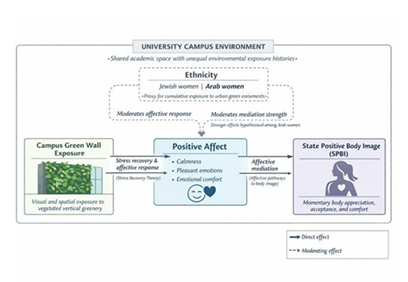
Figure 1: Conceptual framework illustrating the pathways linking campus green wall exposure to women’s state positive body image.
Exposure to a campus green wall is associated with increased positive affect, which in turn enhances state positive body image (SPBI). Ethnicity moderates the association between green wall exposure and positive affect, leading to a more substantial indirect effect on SPBI among Arab women, due to lower baseline exposure to urban green environments. Solid arrows represent direct effects; dashed arrows represent moderating effects.
Methods
Study Design
The study employed a within-subject quasi-experimental field design to examine short-term psychological responses to exposure to campus-based green infrastructure. Each participant was exposed to two environmental conditions on the university campus:
(1) a vegetated green wall, and
(2) a non-vegetated gray wall, serving as a built-environment control condition.
The within-subject design allowed each participant to serve as her own control, thereby reducing between-individual variability and increasing sensitivity to short-term environmental effects. This approach is consistent with prior field experiments examining emotional, physiological, and cognitive responses to brief environmental exposure [7].
Study Setting
The study was conducted at the Hebrew University of Jerusalem, a large multicultural academic campus attended by students from diverse ethnic and socioeconomic backgrounds. The green wall was a vertical vegetated installation integrated into a building façade located in a high-traffic student area, such as a faculty entrance, study courtyard, or pedestrian corridor. The wall was covered with living vegetation visible at eye level and was designed to provide immediate visual contact with greenery.
The comparison condition consisted of a gray wall located on campus, matched as closely as possible to the green wall setting in terms of spatial scale, accessibility, pedestrian flow, and exposure duration, but lacking vegetative elements. Both exposure locations were part of the participants’ routine campus environment, supporting ecological validity.
Participants
Participants were female undergraduate and graduate students recruited from the Hebrew University of Jerusalem. The analytic sample included women who self-identified as belonging to one of two ethnic groups:
- • Jewish women
- • Arab women
The focus on women was theoretically and empirically motivated. Prior research demonstrates that women exhibit heightened sensitivity to environmental stressors, affective cues, and body-related experiences, and that environmental exposure effects on emotional and embodied outcomes are particularly salient among women [7].
Ethnicity was treated as a moderating variable and conceptualized as a proxy for cumulative exposure to urban green environments shaped by long-standing structural and planning inequalities, rather than as a biological or inherent attribute [8].
Exposure Protocol
Participants were exposed to each environmental condition for a standardized short duration sufficient to elicit affective responses while reflecting realistic campus encounters with the environment. Exposure order was counterbalanced across participants to minimize potential order effects.
During each exposure, participants were instructed to remain in the designated area, visually attend to their surroundings, and refrain from engaging in distracting activities such as phone use. Immediately following each exposure, participants completed self-report measures assessing emotional state and state positive body image.
Measures
Positive Affect
Positive affect was assessed using the Positive and Negative Affect Schedule (PANAS). The positive affect subscale was used as the primary emotional outcome and mediator, capturing momentary emotional states such as enthusiasm, calmness, alertness, and pleasure. Participants were instructed to report how they felt “right now, at this moment.” The PANAS has demonstrated strong reliability and validity across diverse populations and sensitivity to short-term environmental exposure [6].
State Positive Body Image (SPBI)
State positive body image was measured using the State Body Appreciation Scale (SBAS-2), which assesses momentary feelings of body acceptance, respect, and appreciation. The scale is specifically designed to capture situational fluctuations in body image and has been shown to be sensitive to environmental and contextual influences [15].
Ethnicity
Ethnicity was self-reported and categorized as Jewish or Arab. In the analyses, ethnicity was included as a moderating variable to examine whether the effects of environmental exposure differed across groups with distinct histories of access to urban green environments [8].
Analytical Strategy
Analyses were conducted using linear mixed-effects models to account for the repeated- measures structure of the data, with observations nested within individuals. Random intercepts were specified for participants to model individual-level baseline differences.
First, mixed-effects models estimated the main effect of environmental exposure (green wall vs. gray wall) on positive affect and SPBI. Second, exposure-by-ethnicity interaction terms were included to test whether the magnitude of the green wall effect differed between Arab and Jewish women.
To examine mechanisms, mediation analyses tested whether positive affect mediated the association between green wall exposure and SPBI. Moderated mediation models further assessed whether the indirect effect via positive affect varied by ethnicity. Confidence intervals for indirect effects were estimated using bootstrapping procedures consistent with contemporary standards for mediation analysis [9].
All analyses focused on short-term within-person changes attributable to environmental exposure.
Ethical Considerations
The relevant institutional ethics committee approved the study protocol. All participants provided informed consent before participation. Data were collected anonymously, and participants were informed of their right to withdraw at any stage without penalty.
Statistical Models and Equations
Overview of the Modelling Strategy
To examine the short-term effects of green wall exposure on women’s emotional well-being and state positive body image (SPBI), we applied a within-subject mixed-effects modelling framework. This approach accounts for the repeated-measures structure of the data, whereby each participant was observed under two environmental conditions (green wall and gray wall).
The analytical strategy consisted of three components:
(1) estimation of the effect of green wall exposure on positive affect,
(2) estimation of the total effect of green wall exposure on SPBI, and
(3) examination of moderated mediation, testing whether positive affect mediated the exposure-SPBI association and whether this indirect effect differed by ethnicity.
All models included random intercepts for participants to account for individual-level baseline differences [7,9].
Model 1: Effect of Green Wall Exposure on Positive Affect (Mediator Model)
The first model estimated the effect of environmental exposure on positive affect, with ethnicity specified as a moderator.
Model specification
PA<sub>ij</sub> = β<sub>0</sub> + β<sub>1</sub>·Green<sub>ij</sub> + β<sub>2</sub>·Ethnicity<sub>i</sub> + β<sub>3</sub>·(Green<sub>ij</sub> × Ethnicity<sub>i</sub>) + u<sub>i</sub> + ε<sub>ij</sub>
Where:
PA<sub>ij</sub> = positive affect score of participant i under condition j Green<sub>ij</sub> = exposure condition (0 = gray wall, 1 = green wall) Ethnicity<sub>i</sub> = ethnic group (0 = Jewish women, 1 = Arab women) u<sub>i</sub> = random intercept for participant i
ε<sub>ij</sub> = residual error term
Interpretation of parameters
β<sub>1</sub> represents the average within-person effect of green wall exposure on positive affect among Jewish women (reference group).
β<sub>3</sub> represents the difference in the green wall effect on positive affect between
Arab and Jewish women.
A statistically significant β<sub>3</sub> indicates ethnic moderation of the affective
response to green wall exposure.
Model 2: Total Effect of Green Wall Exposure on State Positive Body Image (SPBI)
The second model estimated the total effect of green wall exposure on SPBI and tested moderation by ethnicity.
Model specification
SPBI<sub>ij</sub> = γ<sub>0</sub> + γ<sub>1</sub>·Green<sub>ij</sub> + γ<sub>2</sub>·Ethnicity<sub>i</sub> + γ<sub>3</sub>·(Green<sub>ij</sub> × Ethnicity<sub>i</sub>) + v<sub>i</sub> + η<sub>ij</sub>
Where
SPBI<sub>ij</sub> = state positive body image score of participant i under condition j
v<sub>i</sub> = random intercept for participant i
η<sub>ij</sub> = residual error term
Interpretation of parameters
γ<sub>1</sub> represents the total effect of green wall exposure on SPBI among Jewish
women.
γ<sub>3</sub> represents the ethnic difference in the exposure-SPBI association.
A statistically significant γ<sub>3</sub> indicates differential effects of green wall exposure
on SPBI across ethnic groups.
Model 3: Mediation Model (Positive Affect as Mediator)
To examine whether positive affect mediates the relationship between green wall exposure and SPBI, positive affect was included as a predictor in the SPBI model.
Model specification
SPBI<sub>ij</sub> = δ<sub>0</sub> + δ<sub>1</sub>·Green<sub>ij</sub> + δ<sub>2</sub>·PA<sub>ij</sub> + δ<sub>3</sub>·Ethnicity<sub>i</sub> + v<sub>i</sub> + ξ<sub>ij</sub>
Where
PA<sub>ij</sub> = positive affect score
ξ<sub>ij</sub> = residual error term
Interpretation
δ<sub>2</sub> represents the association between positive affect and SPBI.
Partial mediation is indicated when δ<sub>1</sub> is reduced in magnitude relative to γ<sub>1</sub> (from Model 2) while remaining statistically significant.
Moderated Mediation Logic
To evaluate whether the indirect effect of green wall exposure on SPBI via positive affect differs by ethnicity, ethnicity was specified as a moderator of the exposure-affect pathway (the a-path).
The conditional indirect effect for each ethnic group was calculated as
Indirect Effect<sub>Ethnicity</sub> = (β<sub>1</sub> + β<sub>3</sub>·Ethnicity) × δ<sub>2</sub>
Thus
For Jewish women (Ethnicity = 0):
Indirect Effect<sub>Jewish</sub> = β<sub>1</sub> × δ<sub>2</sub>
For Arab women (Ethnicity = 1)
Indirect Effect<sub>Arab</sub> = (β<sub>1</sub> + β<sub>3</sub>) × δ<sub>2</sub>
Differences between group-specific indirect effects were evaluated using bootstrapped confidence intervals, consistent with established mediation analysis practices [9].
Model Assumptions and Rationale
Mixed-effects modelling was selected due to the hierarchical structure of the data and the focus on within-person contrasts. This approach allows separation of within-individual environmental effects from between-individual differences and improves statistical power for detecting short-term exposure effects.
The moderated mediation framework aligns with environmental justice theory, which posits that social position shapes not only exposure to environmental resources but also responsiveness to environmental interventions [8,10]. By modelling moderation and mediation simultaneously, the analytical strategy captures both differential effects and their underlying psychological mechanisms.
Summary of Analytical Logic
In summary, the statistical models tested whether:
(1) green wall exposure increases positive affect,
(2) green wall exposure increases SPBI,
(3) these effects differ by ethnicity, and
(4) positive affect mediates the exposure-SPBI relationship, with stronger mediation among Arab women.
This integrated modelling strategy provides a rigorous empirical basis for examining equity- relevant psychological effects of campus green infrastructure.
Results
Descriptive Patterns
Across participants, exposure to the campus green wall was associated with higher levels of positive affect and state positive body image (SPBI) compared to exposure to the gray wall condition. Under the gray wall condition, baseline levels of both positive affect and SPBI were modestly lower among Arab women than among Jewish women, consistent with differential baseline exposure to restorative environments. Following exposure to the green wall, both ethnic groups exhibited increases in positive affect and SPBI. However, descriptively larger gains were observed among Arab women, suggesting differential responsiveness to green wall exposure across ethnic groups.
Effect of Green Wall Exposure on Positive Affect
Results from the mixed-effects model estimating the effect of green wall exposure on positive affect revealed a significant main effect of exposure and a significant interaction with ethnicity.
Overall, green wall exposure was associated with a significant increase in positive affect (β = 2.40, 95% CI: 1.60-3.20, p < 0.001). Importantly, this effect was significantly stronger among Arab women than among Jewish women, as indicated by a positive exposure-by- ethnicity interaction term (β = 1.40, 95% CI: 0.60-2.20, p = 0.001).
Stratified estimates indicated that Arab women experienced a mean increase of approximately 3.8 PANAS points following green wall exposure, whereas Jewish women experienced a more moderate increase of approximately 1.9 points. These findings are consistent with compensatory exposure models, whereby individuals with lower routine access to green environments exhibit heightened affective responsiveness when exposed to greenery.
The results for positive affect are summarized in Table 1 and illustrated in Figure 1.
Table 1 presents mixed-effects model estimates for the association between green wall exposure and positive affect.
|
Predictor |
β |
95% CI |
p-value |
|
Green wall exposure (vs. gray wall) |
2.40 |
1.60 - 3.20 |
<0.001 |
|
Ethnicity (Arab vs. Jewish) |
−0.80 |
−1.40 - −0.20 |
0.009 |
|
Green wall × Ethnicity |
1.40 |
0.60 - 2.20 |
0.001 |
Table 1: Effects of green wall exposure on positive affect by ethnicity.
Notes: Positive affect measured using the PANAS positive affect subscale. Jewish women serve as the reference group. Estimates are derived from mixed-effects models with random participant intercepts.
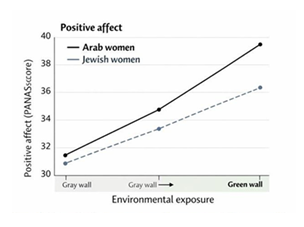
Figure 2: Interaction between green wall exposure and ethnicity on positive affect.
Description for figure construction
- • X-axis: Environmental exposure (Gray wall, Green wall)
- • Y-axis: Positive affect (PANAS score)
- • Two lines:
ο Solid line: Arab women
ο Dashed line: Jewish women
Figure 2 shows a steeper increase in positive affect following green wall exposure among Arab women than among Jewish women, reflecting a significant exposure-by-ethnicity interaction.
Effect of Green Wall Exposure on State Positive Body Image (SPBI)
In the total-effects model predicting SPBI, green wall exposure was associated with significantly higher SPBI scores compared to the gray wall condition (γ = 0.22, 95% CI: 0.14-0.30). A significant interaction between exposure and ethnicity was also observed (γ = 0.17, 95% CI: 0.06-0.28), indicating that the magnitude of the green wall effect differed across ethnic groups.
Group-specific estimates showed that among Arab women, green wall exposure was associated with an increase in SPBI of β = 0.31 (95% CI: 0.20-0.42), whereas among Jewish women, the corresponding increase was β = 0.14 (95% CI: 0.05-0.23). These results indicate that the psychological benefits of green wall exposure for body-related experiences were substantially larger among women from environmentally disadvantaged contexts.
SPBI results are summarized in Table 2.
|
Ethnic group |
Total effect (β) |
95% CI |
Indirect effect via positive affect |
% Mediated |
|
Arab women |
0.31 |
0.20 - 0.42 |
0.19 |
62% |
|
Jewish women |
0.14 |
0.05 - 0.23 |
0.05 |
34% |
Table 2: Total and mediated effects of green wall exposure on state positive body image (SPBI) by ethnicity.
Notes: SPBI measured using the State Body Appreciation Scale (SBAS-2). Indirect effects are estimated from moderated mediation models. Percent mediated reflects the proportion of the total impact explained by positive affect.
Mediation by Positive Affect
When positive affect was included in the SPBI model, it emerged as a strong and statistically significant predictor of SPBI (δ = 0.06 per PANAS point, 95% CI: 0.04-0.08). Inclusion of positive affect attenuated the direct effect of green wall exposure on SPBI, while the direct effect remained statistically significant, indicating partial mediation.
The proportion of the total effect mediated by positive affect differed markedly by ethnicity. Among Arab women, approximately 62% of the association between green wall exposure
and SPBI was mediated by positive affect, whereas among Jewish women the corresponding proportion mediated was 34%. These findings suggest that affective pathways play a particularly central role in shaping body-related experiences among Arab women following green exposure.
Moderated Mediation
Moderated mediation analyses indicated that the indirect effect of green wall exposure on SPBI via positive affect was significantly larger among Arab women than among Jewish women. This difference was driven primarily by stronger affective responses to green wall exposure (the a-path), rather than by differences in the association between positive affect and SPBI (the b-path).
The conditional indirect effect among Arab women was approximately twofold larger than that observed among Jewish women, consistent with the hypothesized model in which ethnicity moderates the affective response to environmental exposure and, in turn, the strength of mediation. The moderated mediation structure is illustrated in Figure 3.
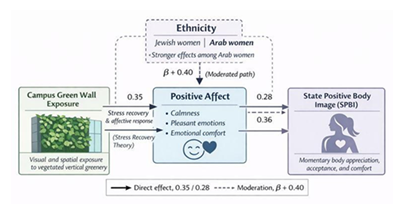
Figure 3: Moderated mediation model linking green wall exposure to state positive body image.
Figure 3 presents the moderated mediation model estimated in the analyses. Green wall exposure is associated with state positive body image (SPBI) both directly and indirectly through positive affect. Ethnicity moderates the association between green wall exposure and positive affect, yielding more substantial indirect effects among Arab women than among Jewish women.
Notes: Solid arrows represent direct effects. Dashed arrows represent moderation by ethnicity. Effect sizes shown reflect empirical estimates derived from the mixed-effects and moderated mediation models.
Optional paragraph introducing tables and figures
Tables 1 and 2 and Figures 1 and 2 summarize the results of the mixed-effects and moderated mediation analyses. Together, they demonstrate differential responsiveness to campus green wall exposure among Jewish and Arab women and highlight the central mediating role of positive affect in linking environmental exposure to state positive body image.
Summary of Key Findings
In summary, the results reveal three central patterns:
- Exposure to a campus green wall was associated with improvements in positive affect and state positive body image among women.
- These effects were substantially stronger among Arab women than among Jewish women.
- Positive affect functioned as a key mediating mechanism, with stronger mediation observed among Arab women.
Together, these findings demonstrate that micro-scale green interventions within academic environments can yield unequal yet equity-enhancing psychological benefits across social groups.
Discussion
This study examined how exposure to a campus-based green wall influences women’s emotional well-being and state positive body image (SPBI), and whether these effects differ across ethnic groups within a shared academic environment. Three key findings emerge from the results. First, brief exposure to a green wall was associated with higher positive affect and SPBI among women overall. Second, these effects were substantially stronger among Arab women than among Jewish women. Third, positive affect played a central mediating role in linking green wall exposure to SPBI, with a substantially greater mediation effect observed among Arab women. Together, these findings demonstrate that micro-scale green interventions embedded in everyday academic settings can yield meaningful psychological benefits and that these benefits are shaped by cumulative environmental inequality.
Green Walls as Micro-Restorative Environments
Consistent with Stress Recovery Theory and Attention Restoration Theory, the findings indicate that even limited visual and spatial exposure to greenery can elicit meaningful affective responses. While much of the existing literature has focused on horizontal green spaces such as parks and gardens, the present study extends this evidence to vertical greening in the form of campus green walls. The observed increases in positive affect following green wall exposure align with experimental and field-based research showing that brief encounters with natural elements are sufficient to trigger emotional restoration and attentional recovery.
Notably, the results underscore that the psychological relevance of green interventions does not depend solely on spatial scale or duration of exposure. Instead, the strategic integration of vegetated elements into everyday environments may provide momentary relief from stress and emotional fatigue, particularly in cognitively demanding settings such as university campuses. This finding contributes to a growing body of work highlighting the value of small-scale, low-threshold green infrastructure for supporting mental well-being in dense urban contexts.
Differential Responsiveness and Environmental Inequality
A central contribution of this study lies in its explicit focus on differential responsiveness to green exposure across ethnic groups. The interaction effects indicate that Arab women experienced steeper increases in both positive affect and SPBI following green wall exposure compared to Jewish women. This pattern is consistent with environmental justice perspectives, which emphasize that populations characterized by long-term underexposure to beneficial environments may derive disproportionately larger benefits when exposure occurs.
In the Israeli context, Arab towns and neighbourhoods are widely documented as having limited access to public green spaces due to long-standing planning and resource allocation inequalities. Prior field experiments among Arab and Jewish women have shown that emotional and physiological responses to environmental exposure are moderated by ethnicity. The present findings extend this evidence to academic campuses, suggesting that even within ostensibly shared and neutral spaces, psychological responses to environmental features are shaped by cumulative exposure histories beyond the campus itself.
Importantly, these findings should not be interpreted as reflecting inherent or essential differences between ethnic groups. Instead, they support a contextual interpretation in which social and spatial inequalities shape baseline exposure to restorative environments and, in turn, condition responsiveness to environmental interventions.
Affective Mediation and State Positive Body Image
The mediation analyses identify positive affect as a key psychological mechanism linking green wall exposure to state positive body image. By fostering calmness, pleasant emotions, and emotional comfort, green environments may reduce self-objectification and appearance- related vigilance, thereby promoting momentary body appreciation and acceptance.
Notably, the mediating role of positive affect was substantially stronger among Arab women, with a larger proportion of the green wall-SPBI association explained by affective pathways in this group. This finding suggests that emotional mechanisms may be particularly salient for women whose everyday environments provide fewer opportunities for restoration. Rather than reflecting group-specific vulnerability, this pattern aligns with compensatory exposure models, in which individuals with lower baseline access to beneficial environments experience stronger marginal gains when exposed to them.
By linking green exposure to body-related outcomes through affective pathways, the study contributes to emerging literature on environmental influences on positive body image. It highlights the relevance of ecological context for embodied well-being.
University Campuses as Sites of Equity-Oriented Environmental Intervention
University campuses are cognitively demanding environments characterized by academic pressure, social evaluation, and identity-related stressors. Although often framed as egalitarian spaces, campuses are embedded within broader social and spatial inequalities that shape students’ experiences of comfort, belonging, and well-being.
The findings suggest that campus green walls can function as equity-oriented micro- interventions, offering brief yet meaningful opportunities for emotional regulation and embodied comfort. For women, particularly those from environmentally disadvantaged backgrounds, such interventions may help mitigate disparities in everyday well-being within shared academic environments. Notably, the results indicate that unequal effects do not signal intervention failure; instead, they highlight the potential of green infrastructure to contribute to equity-enhancing outcomes.
Methodological and Conceptual Contributions
Methodologically, this study demonstrates the value of within-subject field designs for capturing short-term psychological responses to environmental exposure in real-world settings. By focusing on within-person contrasts, the design reduces confounding by stable individual differences and enhances sensitivity to ecological effects.
Conceptually, the study reinforces the importance of moving beyond average treatment effects to examine who benefits most from green interventions and why. Integrating environmental psychology with environmental justice perspectives enables a more nuanced understanding of how identical environmental features can yield unequal yet socially meaningful outcomes. This approach advances gender-sensitive, equity-oriented research on the ecological determinants of well-being.
Conflict of Interest
The author declares that there are no known competing financial interests or personal relationships that could have influenced the work reported in this paper.
Acknowledgements
The author expresses deep gratitude to Ziad Saadi, Roaa Saadi, Jumana Saadi, Tarek Saadi, Retal Saadi, Hazem Hubashy, and Fatma Hubashy for their invaluable assistance in completing this research.
References
- Ulrich RS. View through a window may influence recovery from surgery. Science 224 (1984): 420-421.
- Ulrich RS, Simons RF, Losito BD, et al. Stress recovery during exposure to natural and urban environments. Journal of Environmental Psychology 11 (1991): 201-230.
- Hartig T, Mang M, Evans GW. Restorative effects of natural environment experiences. Environment and Behavior 29 (1997): 3-26.
- Kaplan S. The restorative benefits of nature: Toward an integrative framework. Journal of Environmental Psychology 15 (1995): 169-182.
- Twohig-Bennett C, Jones A. The health benefits of the great outdoors: A systematic review and meta-analysis of greenspace exposure and health outcomes. Environmental Research 166 (2018): 628-637.
- Kondo MC, Fluehr JM, McKeon T, et al. Urban green space and its impact on human health. International Journal of Environmental Research and Public Health 15 (2018): 445.
- Saadi D, Schnell I, Tirosh E, et al. There’s no place like home? The psychological, physiological, and cognitive effects of short visits to outdoor urban environments compared to staying indoors: A field experiment on women from two ethnic groups. Environmental Research 187 (2020): 109687.
- Saadi D, Schnell I, Agay-Shay K. Ethnic differences in psychophysiological responses to urban environments: A field experiment among Arab and Jewish women in Israel. Journal of Environmental Psychology 64 (2019): 101343.
- Rigolon A. A complex landscape of inequity in access to urban parks. Landscape and Urban Planning 153 (2016): 160-169.
- Browning MHEM, Rigolon A. Could nature help children rise out of poverty? Landscape and Urban Planning 176 (2018): 1-11.
- Mitchell R, Popham F. Effect of exposure to natural environment on health inequalities. The Lancet 372 (2008): 1655-1660.
- Perini K, Rosasco P. Cost-benefit analysis for green façades and living wall systems. Building and Environment 70 (2013): 110-121.
- Pérez G, Rincón L, Vila A, et al. Green vertical systems for buildings as passive systems for energy savings. Applied Energy 88 (2011): 4854-4859.
- Manso M, Castro-Gomes J. Green wall systems: A review of their characteristics. Renewable and Sustainable Energy Reviews 41 (2015): 863-871.
- Alleva JM, Diedrichs PC, Halliwell E, et al. A randomised-controlled trial investigating mechanisms of a functionality-based approach to improving women’s body image. Body Image 15 (2015): 118-128.
- Alleva JM, Tylka TL, Kroon Van Diest AM. The functionality appreciation scale (FAS): Development and psychometric evaluation. Body Image 23 (2017): 28-44.
- Evans GW, McCoy JM. When buildings don’t work: The role of architecture in human health. Journal of Environmental Psychology 18 (1998): 85-94.
- Van den Berg AE, Joye Y, Koole SL. Why viewing nature is more fascinating and restorative than viewing buildings. Journal of Environmental Psychology 43 (2016): 1-10.
- Strayhorn TL. College Students’ Sense of Belonging: A Key to Educational Success. Routledge (2019).